
4 Tactics for Building a Culture of Improvement in Your Contact Center Team

- Updated:
- Authored by
-
 Robert Cowlishaw Head of Marketing
Over the past year, we observed a wide range of contact center team leaders. After all those observations, we found that the best leaders had one thing in common. They made time for the people on their team.
These supervisors and managers were available to sit down, have one-on-one conversations, and provide guidance on any challenges their team members were facing. They shared helpful resources, drove competition, and celebrated wins – both little and big.
But how did these leaders find the time?
These contact center leaders had a bias toward action. They interpreted team needs much faster than their peers – navigating through reports, spreadsheets, and analysis – and moved quickly to their action plans.
But these supervisors didn’t do this all on their own. This group of high-performing team leads benefited from:
- Longer leadership tenure
- Effective utilization of performance intelligence
- Access to skilled mentors and managers
The Daily Gameplan: Coach, Recognize, Play, Share
To help others lead like the best, we've created a daily game plan based on the actions of last year's top talent.
This plan reminds leaders to focus on specific areas each day. These tasks include coaching, recognition, sharing best practices, and having fun with the team. Incorporating these activities into a daily routine will show that focused, consistent action leads to results.
Every team leader should have a daily gameplan including one or more of these four tasks:
- Conduct a one-on-one coaching session
- Give a high-five
- Play a game
- Share some knowledge
Download your own gameplan here:
Conduct a one-on-one coaching session.

Coach at least one employee each day. If your supervisors manage a team of 15, hosting one daily coaching session allows them to meet with each team member twice a month.
To keep track of coaching, we’ve created the The Coaching Template for one-on-one coaching sessions. This interactive template includes basic questions for every session, and it also tracks sessions and progress. Plus, an email of each submitted form will be sent to the team leader after each session. The template is also available on Google Docs, Sheets and Word and Excel.
Sheets Preview:
Docs Preview:
For remote workforces, try using a conference call software to enable real-time collaboration. One of the benefits of modern conferencing software platforms like Zoom or Skype is that they prioritize video functionality so team members can see each other.
This software normally also allows screen sharing which is a big benefit to keeping everyone in the meeting engaged and focused.
Check out this list of tips for improving the tele-coaching experience.
Fun Fact
According to a survey by the Association for Talent Development (ATD), companies that provided regular coaching to their employees reported a median ROI of almost 600%. This shows that employee coaching can have a significant impact on a company's bottom line.
Give a high-five.

Coaching is an important aspect of leadership. However, it's just as important to recognize and reward employee performance.
When team members go above and beyond expectations, take the time to identify specific reasons why their performance is impressive. Then let them know their efforts are appreciated. If you’re in the office, find a team member that’s recently improved or exceeded expectations, and give them a high-five.
Not a high-five person? Bring this outstanding employee a cup of coffee instead. Just don’t forget to tell them why they are being recognized!
Additional tips for remote workers:
With more people working remotely, it can be easy to forget to provide recognition and effective coaching feedback to employees. However, it's important to make an effort to communicate regularly with your team and let them know when they are doing a good job and why. This can be done through messaging channels, email, or recorded video messages.
Record Recognition: Send Now. Watch Later.
One of our team's favorite things to do is to record a recognition video, and send it over to the recipient. This is helpful as it allows busy customer teams to send and receive detailed feedback during free time. Loom.com is a free tool that you can use to record videos (up to 5 minutes long). Just record your recognition. And send your team member the link! It will even notify you when they watch it.
Here's a quick video on how to send recognition with Loom.com
Fun Fact:
According to a survey by the Society for Human Resource Management (SHRM), 82% of employees said that receiving recognition for their work made them feel motivated to continue performing at a high level. This shows the importance of employee recognition in terms of boosting morale and motivation among team members
Play a game.

Work without fun, is just… work. So, remember to play a few games.
Take 15 minutes and get your team’s competitive juices flowing. Choose from one-off games, like jeopardy, or start a weekly contest. One-off games are great for quick bursts of engagement, and contests create opportunities to close performance gaps.
Additional tip for all teams: Incorporate learning into weekly games:
Each week, have a different team member create a set of questions related to their area of expertise, and the rest of the team would compete to see who could answer the most questions correctly. This game helps to boost morale and motivation among the team, as it provides a fun and engaging way to learn from each other and improve their knowledge and skills. It also helps to increase collaboration and communication, as team members have to work together to come up with the correct answers.
Track it
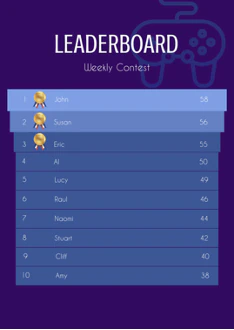
Want to track progress? Create a free leaderboard and update your team each week!
Share some knowledge.

Sharing learning tips and best practices amongst your team is pivotal for growth. It can be as easy as copying the link from an interesting article or video, and sending it to your team in the morning. Where can you find the best practices? Check your Learning Management System, Google tips and tricks for specific situations, or ask an expert on your team to share one of their favorite tips.
Tips for optimal learning:
- Summarize what you're sharing
- Explain why you’re sharing it
- Ask for feedback and try to create a dialog
Example:
Hey team, I heard an outstanding response to an angry customer yesterday. This is a great tactic for everyone to practice – if our team can reproduce responses like this, we’ll see our satisfaction scores jump up! So please give it a listen, and share any thoughts or comments with the team. [share link to customer interaction]
Tip for remote teams:
- Document what is shared. Sharing a tip once is helpful. But it won’t help someone that joins your team in two months. Make sure to keep a record of what is shared. You can do this in a word document or a spreadsheet. This source of knowledge will help your current and future team take advantage of everything your team shares.
- Create and share a video summary along with your tip or best practice. Not only will this help visual learners understand what’s being communicated, but it will also improve the record of the knowledge that’s shared.
- Prompt team members to record their own tips and best practices. Your high performing team members are the perfect targets for knowledge sharing. If you can teach them how to share tips, you’re making your job that much easier.
Start one at a time.
Starting with one daily action is an effective way to sustainably grow team performance. By focusing on one action every day, you can make it a regular part of your routine. It also helps you avoid becoming overwhelmed or frustrated by trying to take on too much at once.
Over time, as you see how your team is influenced by the mix of actions, you can start to focus on multiple daily actions. But first, you want to create a solid foundation for lasting, positive change. So, if you're looking to make positive improvements in your team in the coming months, consider starting with just one daily development action, and build from there.
And remember to:
- Spread actions around to different team members
- Communicate why your coaching, recognizing, launching a game or sharing a tip
- Have fun with it.