
10 Best Call Center Workforce Management (WFM) Software 2026
- Published:
- Updated:
- Authored by
-
 Richard James Director of Organic Growth and CX
 - Reviewed by
-
 Sean Minter Founder, CEO
Call center workforce management software forecasts contact volume, calculates staffing requirements, builds agent schedules, and monitors real-time adherence across voice and digital channels. WFM planners and contact center leaders use forecasting, scheduling, capacity, and adherence data to align staffing coverage with expected demand and service-level requirements.
Our team of CX specialists reviewed and ranked the 10 best call center workforce management software vendors of 2026 based on coverage across WFM software types, features, and evaluation criteria:
When evaluating call center workforce management software vendors, focus on forecasting accuracy, scheduling flexibility, intraday responsiveness, agent self-service, and WFM data access through APIs.
Start your workforce management software vendor comparison in the three sections below:
- Types of Call Center Workforce Management Software: Where CCaaS-embedded, WEM suite, standalone specialist, and cloud-native WFM fit across contact center technology stacks and integration requirements.
- Call Center Workforce Management Software Features: Which capabilities to compare vendors against your forecasting, scheduling, intraday, agent self-service, integration, and WFM data requirements.
- Call Center Workforce Management Software Evaluation Criteria: How to test vendors for forecasting accuracy, scheduling flexibility, intraday responsiveness, data portability, agent experience, and total cost of ownership.
WFM Data Integration and Performance Management: WFM data is more valuable when staffing decisions are measured against agent performance, service quality, customer outcomes, and business results. Unified CX and performance management software like AmplifAI unifies CX data from any source into one performance layer across agents, teams, sites, and BPO partners.
Compare the Best Call Center Workforce Management Software of 2026
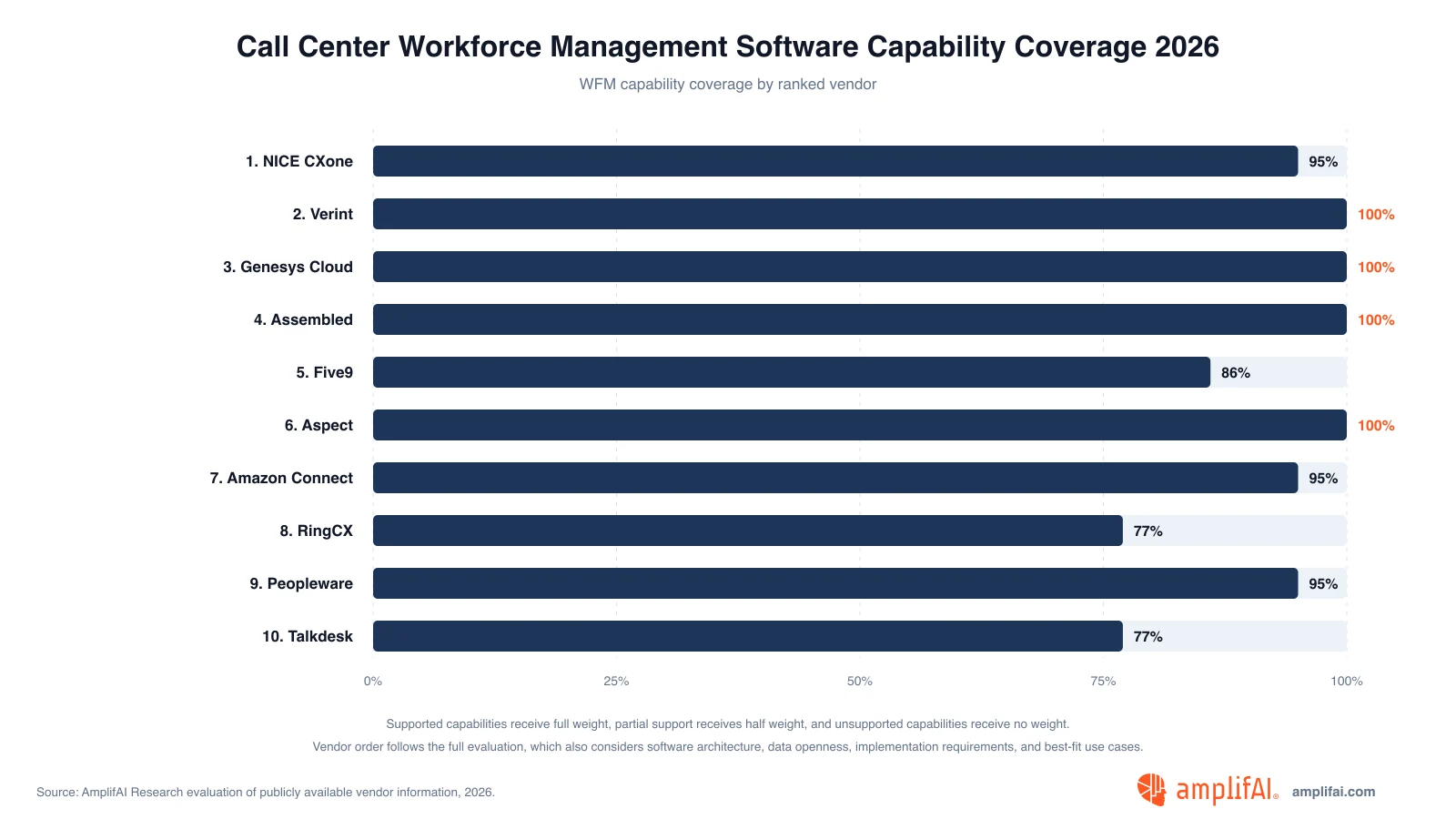
Compare the 10 best call center workforce management software vendors of 2026, with vendor rank combining documented WFM capability coverage, software architecture, data openness, implementation requirements, best-fit use cases, and evaluation criteria.
| Rank | Workforce Management Software | Best Fit | WFM Capability Coverage |
|---|---|---|---|
| 1 | NICE CXone | Enterprise and large mid-market contact centers already using NICE CXone CCaaS | 95% |
| 2 | Verint | Enterprise contact centers and BPOs managing multi-site, multi-skill scheduling across cloud, on-premises, or hybrid environments | 100% |
| 3 | Genesys Cloud | Contact centers using Genesys Cloud CX or Genesys Cloud EX alongside an existing ACD | 100% |
| 4 | Assembled | Contact centers needing standalone, cloud-native WFM across multiple CCaaS, CRM, HR, or collaboration platforms | 100% |
| 5 | Five9 | Contact centers using Five9 CCaaS or WEM that want WFM inside the same provider environment | 86% |
| 6 | Aspect | Enterprise contact centers and BPOs managing multi-site, multi-skill scheduling across on-premises, hosted, private-cloud, or public-cloud deployments | 100% |
| 7 | Amazon Connect | Contact centers already using Amazon Connect Customer that want native WFM inside their existing CCaaS environment | 95% |
| 8 | RingCX | Contact centers using RingCX or evaluating RingWEM as a standalone workforce engagement management suite | 77% |
| 9 | Peopleware | Contact centers and BPOs needing CCaaS-independent WFM across multiple clients, sites, skills, languages, channels, and time zones | 95% |
| 10 | Talkdesk | Contact centers whose forecasting, scheduling, and adherence requirements need to stay inside Talkdesk’s CCaaS environment | 77% |
| Capability Coverage gives full weight to supported features, half weight to partial support, and no weight to unsupported capabilities, with vendor ranking also considering their software architecture, data openness, implementation requirements, and best-fit use cases. | |||
Compare WFM feature support across vendors in the capability coverage chart below.
What is Call Center Workforce Management Software
Call center workforce management software is a forecasting, scheduling, and adherence system that converts historical contact volume, service-level targets, agent skills, availability, shrinkage, and labor rules into staffing requirements and agent schedules. WFM planners use real-time queue and agent-status data to compare scheduled coverage with actual demand, re-forecast staffing needs, and adjust schedules as contact volume changes throughout the day.
Types of Call Center Workforce Management Software
Call center workforce management software is delivered through four deployment models based on who provides WFM, where it runs, and how workforce data moves beyond the provider's product ecosystem. CCaaS-embedded WFM, WEM-suite with WFM, standalone WFM specialists, and cloud-native WFM can overlap within a vendor's product portfolio.
| WFM Deployment Model | What It Does | Vendors |
|---|---|---|
| CCaaS-Embedded WFM | Ships natively inside a CCaaS suite, sharing routing data, interaction history, and queue metrics within one provider for unified forecasting and scheduling. | NICE CXone, Genesys Cloud, Five9, Amazon Connect, RingCX |
| WEM Suite WFM | Bundles forecasting and scheduling alongside quality management, analytics, and agent engagement capabilities under one workforce engagement management vendor. | Verint, Genesys Cloud, Five9, Aspect, RingCX |
| Standalone WFM Specialist | Delivers purpose-built forecasting algorithms and scheduling optimization designed to connect with any ACD, CCaaS, or on-premises telephony deployment through open integrations. | Assembled, Aspect, Peopleware |
| Cloud-Native WFM | Delivers API-first forecasting and scheduling for contact centers using multiple software providers, with WFM data available through integrations, exports, and APIs. | Assembled, Peopleware |
| Match vendor WFM deployment model to your current CCaaS, hosting requirements, connected software, internal WFM resources, and need to move workforce data outside a vendor suite. | ||
Workforce Management vs Workforce Optimization vs Workforce Engagement
Workforce Management (WFM) aligns staffing with demand, while Workforce Optimization (WFO) uses workforce and interaction data to improve quality and performance, with Workforce Enagagement Management (WEM) extending performance management into agent development and engagement. Use the table below to identify which category covers your requirements and whether those capabilities are native, supplied through another module, or integrated from another vendor.
| Software Category | What It Manages | Capabilities | Representative Vendors |
|---|---|---|---|
| Workforce Management (WFM) | Staffing demand and schedule coverage | Contact forecasting, staffing requirements, capacity planning, agent scheduling, real-time adherence, intraday management, and agent self-service | NICE CXone, Verint, Genesys Cloud, Five9, Assembled |
| Workforce Optimization (WFO) | Quality, productivity, and performance | Workforce, quality, interaction, and performance data; quality assurance; conversation intelligence; performance analytics; coaching workflows; and outcome measurement | AmplifAI, NICE CXone, Verint, Genesys Cloud, Five9 |
| Workforce Engagement Management (WEM) | Agent development, engagement, and performance | Coaching, goals, recognition, gamification, employee engagement, and role-based performance visibility | AmplifAI, NICE CXone, Verint, Genesys Cloud, Talkdesk |
| Use WFM to forecast demand, build schedules, and manage adherence. Choose WFO when workforce and interaction data need to support quality and performance improvement, or WEM when coaching, recognition, gamification, and employee development are also required. Confirm whether supporting capabilities are native, supplied through another vendor module, or dependent on an integration. | |||
Call Center Workforce Management Software Features
Use the call center workforce management software feature comparison below to review planning, scheduling, intraday control, agent access, and WFM data availability across vendors. Feature coverage contributes to our rankings, while your requirements decide which capabilities will carry the most weight in your contact center.
| WFM Software Feature | What It Does | Vendors |
|---|---|---|
| Omnichannel Forecasting | Predicts contact volume across voice, chat, email, SMS, and social channels using historical patterns, seasonality, and trend analysis to generate staffing requirements per channel and skill group. | NICE CXone, Verint, Genesys Cloud, Assembled, Five9 |
| Automated Scheduling & Optimization | Generates agent schedules from forecasted demand, skill requirements, agent availability, labor rules, and business constraints. | NICE CXone, Verint, Genesys Cloud, Assembled, Five9 |
| Real-Time Adherence Monitoring | Compares live agent status with scheduled activity and alerts supervisors to out-of-adherence events. | NICE CXone, Verint, Genesys Cloud, Assembled, Five9 |
| Intraday Management | Reforecasts demand and adjusts schedules as contact volume, agent availability, and staffing requirements change throughout the day. | NICE CXone, Verint, Genesys Cloud, Assembled, Five9 |
| Agent Self-Service | Provides portal and mobile access for shift bidding, shift swaps, time-off requests, and schedule visibility, with configurable approval rules for schedule changes. | NICE CXone, Verint, Genesys Cloud, Assembled, Five9 |
| Shrinkage & Capacity Planning | Models long-range staffing requirements using shrinkage, attrition, training time, seasonal demand, and forecasted contact volume. | NICE CXone, Verint, Genesys Cloud, Assembled, Aspect |
| Multi-Skill & Multi-Site Support | Optimizes schedules across sites, skill groups, time zones, and channels using agent availability and forecasted demand. | NICE CXone, Verint, Genesys Cloud, Assembled, Five9 |
| Integration Openness | Connects WFM with ACD, CCaaS, CRM, QA, and performance management software through pre-built connectors and integration frameworks. | NICE CXone, Verint, Genesys Cloud, Assembled, Five9 |
| Data Portability & API Access | Makes scheduling, adherence, and forecasting data available to analytics, payroll, QA, and performance management software through APIs, webhooks, and exports. | Verint, Genesys Cloud, Assembled, Aspect, Amazon Connect |
| AI-Powered Automation | Applies AI to forecast selection, schedule optimization, anomaly detection, and intraday staffing recommendations. | NICE CXone, Verint, Genesys Cloud, Assembled, Aspect |
| Reporting & Analytics | Provides historical and real-time dashboards for service levels, agent performance, schedule efficiency, staffing coverage, and labor costs. | NICE CXone, Verint, Genesys Cloud, Assembled, Five9 |
| Prioritize forecasting and scheduling depth when staffing coverage is your primary requirement, while integration and data access carry more weight when scheduling and adherence data also needs to support quality, coaching, and performance management. | ||
Call Center Workforce Management Software Evaluation Criteria
Use the call center workforce management software evaluation criteria below to test vendor feature claims against your demand patterns, scheduling complexity, workforce policies, current CCaaS, workforce data sources, and budget.
| Evaluation Criteria | What to Evaluate | Why It Matters |
|---|---|---|
| Forecasting Accuracy | Test the vendor's forecasting engine against your historical data across voice and digital channels, measuring variance between predicted and actual contact volumes over 30, 60, and 90 day windows. | Forecasting variance leaves schedules short during volume spikes or overstaffed during slower periods, increasing service-level risk and labor costs as the gap grows. |
| Scheduling Flexibility | Confirm the scheduling engine supports your contact center's mix of skill groups, split shifts, full-time and part-time agents, cross-site staffing, and labor requirements across jurisdictions. | Basic WFM can support a single site with limited skill groups, while multi-site contact centers need scheduling optimization that accounts for complex skills, shift patterns, and labor requirements. |
| Intraday Responsiveness | Evaluate whether intraday management reforecasts automatically based on real-time volume and agent availability changes, or only alerts on out-of-adherence events after the fact. | Reactive adherence alerts show where staffing has already moved off schedule, while real-time reforecasting and schedule adjustments help workforce teams correct coverage before service levels decline. |
| Data Portability | Verify that scheduling, adherence, and forecasting data can reach your analytics, payroll, QA, and performance management systems through APIs, webhooks, or exports without premium tiers, gated access, or vendor-imposed restrictions. | Scheduling and adherence data supports quality, coaching, and performance management across your contact center, while gated APIs and premium integration tiers limit access outside the WFM environment. |
| Agent Experience | Assess agent self-service across shift bidding, swaps, time-off requests, and schedule visibility, including which requests require supervisor approval and which can follow automated rules. | Agent self-service reduces supervisor administration around routine schedule changes, with agents gaining more flexibility over shifts, swaps, and time-off requests. |
| Total Cost of Ownership | Calculate total cost across base licensing, premium modules, implementation services, ongoing administration, and separate tiers for strategic planning or AI forecasting. | Base license comparisons can exclude premium modules, implementation services, administration, and CCaaS commitments, making total cost of ownership more useful than per-agent pricing alone. |
| Apply call center workforce management software evaluation criteria to your demand patterns, scheduling constraints, workforce policies, existing systems, administration requirements, and budget so your shortlist reflects contact center fit alongside feature coverage. | ||
Best Call Center Workforce Management Software (2026)
Our reviews of the best call center workforce management software vendors of 2026 were ranked by our team of CX specialists based on coverage across WFM software types, features, and evaluation criteria. Each vendor review includes supported capabilities, best-fit use cases, and considerations.
1. NICE CXone Workforce Management Software
NICE CXone call center workforce management software provides AI-powered forecasting, scheduling, real-time adherence, and intraday management inside their CXone CCaaS suite. Native data sharing across CXone WFM, quality management, recording, and interaction analytics supports workforce planning across voice and digital channels.
NICE CXone Call Center Workforce Management (WFM) Deployment Models
| WFM Deployment Model | Description | NICE CXone Classification |
|---|---|---|
| CCaaS-Embedded WFM | WFM native to a CCaaS suite | ✅ |
| WEM Suite WFM | WFM bundled in a workforce engagement suite | — |
| Standalone WFM Specialist | Purpose-built WFM with open integrations | — |
| Cloud-Native WFM | API-first WFM for multi-provider contact centers | — |
NICE CXone Call Center Workforce Management (WFM) Software Features
| WFM Software Feature | Feature Description | NICE CXone |
|---|---|---|
| Omnichannel Forecasting | Demand forecasting across voice and digital channels | ✅ |
| Automated Scheduling & Optimization | Schedule generation from demand, skills, availability, and labor rules | ✅ |
| Real-Time Adherence Monitoring | Live comparison of agent status with scheduled activity | ✅ |
| Intraday Management | Demand reforecasting and schedule adjustment throughout the day | ✅ |
| Agent Self-Service | Shift bidding, swaps, time-off requests, and schedule visibility | ✅ |
| Shrinkage & Capacity Planning | Long-range staffing requirements using shrinkage and forecasted demand | ✅ |
| Multi-Skill & Multi-Site Support | Scheduling across sites, skills, channels, and time zones | ✅ |
| Integration Openness | Connections with ACD, CCaaS, CRM, QA, and performance management software | ✅ |
| Data Portability & API Access | Scheduling, adherence, and forecasting data through APIs, webhooks, and exports | ⚠️ |
| AI-Powered Automation | AI forecast selection, schedule optimization, and intraday recommendations | ✅ |
| Reporting & Analytics | Historical and real-time WFM dashboards | ✅ |
Standout Features and Capabilities of NICE CXone
- AI Forecasting: Tests forecasting models against historical interaction data and updates demand predictions across voice and digital channels
- Long-Range Capacity Planning: Enhanced Strategic Planner models staffing requirements and what-if scenarios across monthly and multi-year planning periods
- Workforce Manager Copilot: Provides schedule information and natural-language schedule changes for intraday workforce management
Best Fit: Who Should Use NICE CXone
- Enterprise and large mid-market contact centers already running CXone CCaaS
- Contact centers forecasting and scheduling voice and digital workloads inside one CXone environment
- Workforce teams needing native access to WFM, quality management, recording, and interaction analytics
NICE CXone Considerations
- Schedule and workforce data are available through CXone WFM APIs, although current documentation does not establish complete portability for adherence and forecasting data
- Enhanced Strategic Planner and other capacity-planning capabilities may require additional modules
- Contact centers outside CXone should confirm CCaaS, integration, and migration requirements for deploying CXone WFM
NICE CXone Call Center Workforce Management (WFM) Software Overview
NICE CXone WFM fits contact centers that plan to manage forecasting, scheduling, adherence, quality management, recording, and interaction analytics inside CXone.
Compare NICE Alternatives Across 13 Software Categories
2. Verint Workforce Management Software
Verint call center workforce management software provides forecasting, scheduling, adherence, capacity planning, and agent self-service within its workforce engagement management portfolio. Verint and Calabrio began operating under the Verint corporate brand in early 2026, while Verint WFM and Calabrio WFM remain separate supported product lines. Verint WFM supports enterprise contact centers and BPOs managing multi-site, multi-skill scheduling across cloud, on-premises, and hybrid environments.
Verint Call Center Workforce Management (WFM) Deployment Models
| WFM Deployment Model | Description | Verint Classification |
|---|---|---|
| CCaaS-Embedded WFM | WFM native to a CCaaS suite | — |
| WEM Suite WFM | WFM bundled in a workforce engagement suite | ✅ |
| Standalone WFM Specialist | Purpose-built WFM with open integrations | — |
| Cloud-Native WFM | API-first WFM for multi-provider contact centers | — |
Verint Call Center Workforce Management (WFM) Software Features
| WFM Software Feature | Feature Description | Verint |
|---|---|---|
| Omnichannel Forecasting | Demand forecasting across voice and digital channels | ✅ |
| Automated Scheduling & Optimization | Schedule generation from demand, skills, availability, and labor rules | ✅ |
| Real-Time Adherence Monitoring | Live comparison of agent status with scheduled activity | ✅ |
| Intraday Management | Demand reforecasting and schedule adjustment throughout the day | ✅ |
| Agent Self-Service | Shift bidding, swaps, time-off requests, and schedule visibility | ✅ |
| Shrinkage & Capacity Planning | Long-range staffing requirements using shrinkage and forecasted demand | ✅ |
| Multi-Skill & Multi-Site Support | Scheduling across sites, skills, channels, and time zones | ✅ |
| Integration Openness | Connections with ACD, CCaaS, CRM, QA, and performance management software | ✅ |
| Data Portability & API Access | Scheduling, adherence, and forecasting data through APIs, webhooks, and exports | ✅ |
| AI-Powered Automation | AI forecast selection, schedule optimization, and intraday recommendations | ✅ |
| Reporting & Analytics | Historical and real-time WFM dashboards | ✅ |
Standout Features and Capabilities of Verint
- AI Forecasting: Analyzes historical volumes, work types, handle times, and external events across synchronous and asynchronous channels before selecting a forecasting model
- Flexible Scheduling: Gives agents self-service schedule changes while applying staffing and service-level constraints
- Mobile Workforce Access: Gives agents and supervisors mobile access to schedules, shift changes, and adherence data
Best Fit: Who Should Use Verint
- Enterprise contact centers and BPOs managing multi-site, multi-skill scheduling
- Organizations maintaining on-premises or hybrid WFM environments alongside cloud systems
- Workforce planning teams requiring long-range capacity planning, intraday management, and flexible agent scheduling
Verint Considerations
- Verint WFM and Calabrio WFM remain separate product lines, requiring buyers to confirm which capabilities belong to each product and how surrounding WEM modules connect
- Enterprise deployment, configuration, and licensing requirements should be evaluated against contact center size, existing infrastructure, and implementation resources
- WFM-only buyers should confirm which workforce engagement, automation, and mobile capabilities require additional modules
Verint Call Center Workforce Management (WFM) Software Overview
Verint WFM covers enterprise forecasting, multi-site scheduling, adherence, agent self-service, and long-range capacity planning across cloud, on-premises, and hybrid environments.
3. Genesys Cloud Workforce Management Software
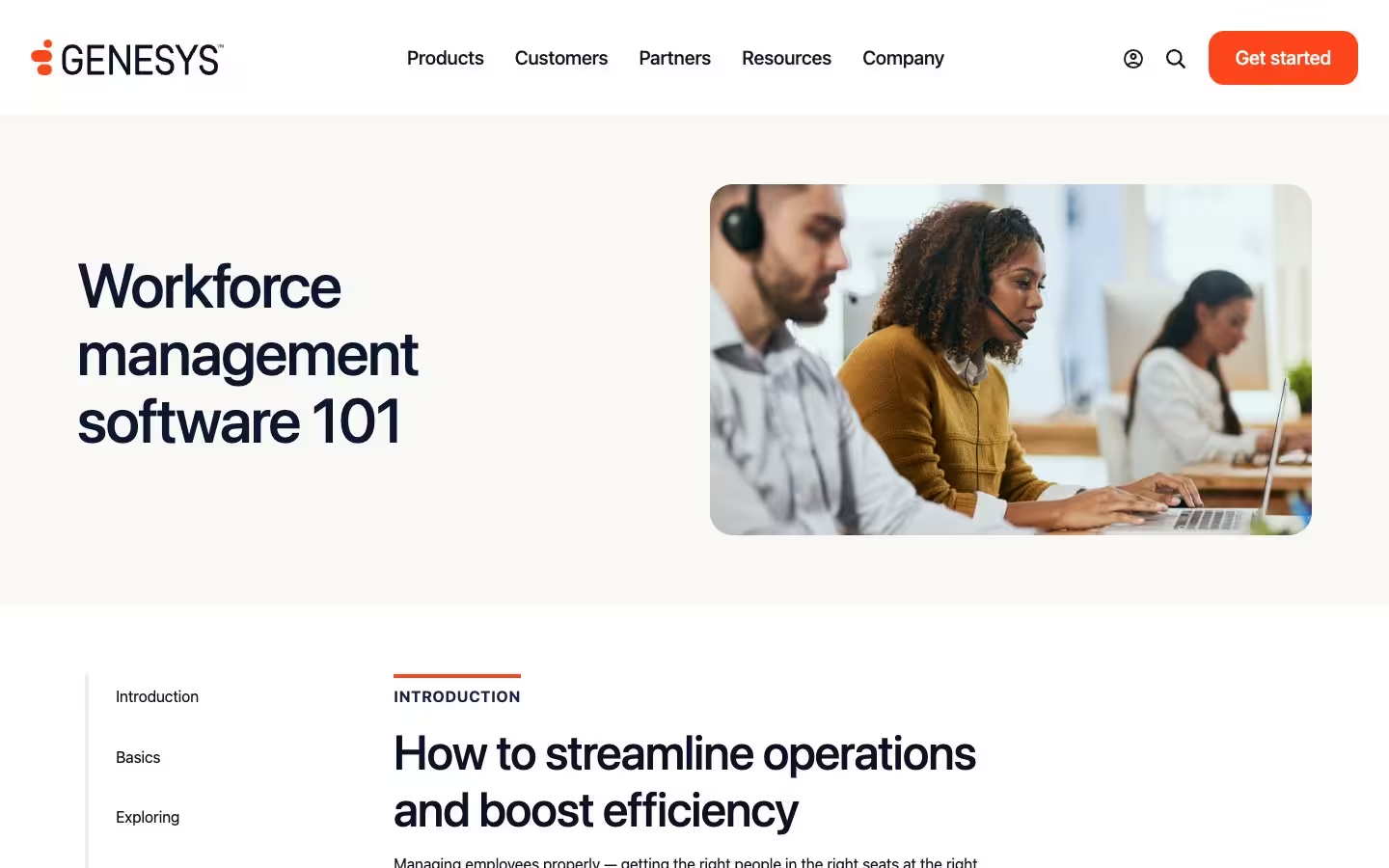
Genesys Cloud call center workforce management software provides AI forecasting, automated scheduling, real-time adherence, and intraday management within Genesys Cloud CX. Genesys Cloud EX extends the same cloud-based WFM capabilities alongside an existing ACD, giving contact centers an embedded CCaaS or WEM-suite deployment path. Forecasting and scheduling cover voice, email, chat, callbacks, messaging, and workitems through business-unit and management-unit structures.
Genesys Cloud Call Center Workforce Management (WFM) Deployment Models
| WFM Deployment Model | Description | Genesys Cloud Classification |
|---|---|---|
| CCaaS-Embedded WFM | WFM native to a CCaaS suite | ✅ |
| WEM Suite WFM | WFM bundled in a workforce engagement suite | ✅ |
| Standalone WFM Specialist | Purpose-built WFM with open integrations | — |
| Cloud-Native WFM | API-first WFM for multi-provider contact centers | — |
Genesys Cloud Call Center Workforce Management (WFM) Software Features
| WFM Software Feature | Feature Description | Genesys Cloud |
|---|---|---|
| Omnichannel Forecasting | Demand forecasting across voice and digital channels | ✅ |
| Automated Scheduling & Optimization | Schedule generation from demand, skills, availability, and labor rules | ✅ |
| Real-Time Adherence Monitoring | Live comparison of agent status with scheduled activity | ✅ |
| Intraday Management | Demand reforecasting and schedule adjustment throughout the day | ✅ |
| Agent Self-Service | Shift bidding, swaps, time-off requests, and schedule visibility | ✅ |
| Shrinkage & Capacity Planning | Long-range staffing requirements using shrinkage and forecasted demand | ✅ |
| Multi-Skill & Multi-Site Support | Scheduling across sites, skills, channels, and time zones | ✅ |
| Integration Openness | Connections with ACD, CCaaS, CRM, QA, and performance management software | ✅ |
| Data Portability & API Access | Scheduling, adherence, and forecasting data through APIs, webhooks, and exports | ✅ |
| AI-Powered Automation | AI forecast selection, schedule optimization, and intraday recommendations | ✅ |
| Reporting & Analytics | Historical and real-time WFM dashboards | ✅ |
Standout Features and Capabilities of Genesys Cloud
- Forecast Model Selection: Tests historical demand against multiple forecasting methods and selects a model for each workload
- Voice, Digital, and Workitem Forecasting: Plans voice, email, chat, callbacks, messaging, and back-office work through separate workload forecasts
- Intraday Monitoring: Compares forecast and schedule data with actual demand and staffing throughout the day
Best Fit: Who Should Use Genesys Cloud
- Contact centers using Genesys Cloud CX and wanting WFM inside their CCaaS
- Contact centers using Genesys Cloud EX alongside an existing ACD
- Workforce planners forecasting voice, digital, callback, and workitem demand across business units
Genesys Cloud Considerations
- Genesys Cloud CX and Genesys Cloud EX provide different WFM purchasing paths, requiring buyers to confirm which licensing model and integrations fit their current ACD
- Genesys Cloud WFM is cloud-only, so contact centers maintaining on-premises WFM should evaluate migration and data-retention requirements
- Multi-CCaaS deployments should confirm how external interaction and workforce data enters Genesys Cloud for forecasting, scheduling, and adherence
Genesys Cloud Call Center Workforce Management (WFM) Software Overview
Genesys Cloud WFM covers voice, digital, callback, and workitem forecasting through a cloud-only WFM environment, with deployment available through Genesys Cloud CX or Genesys Cloud EX.
4. Assembled Workforce Management Software
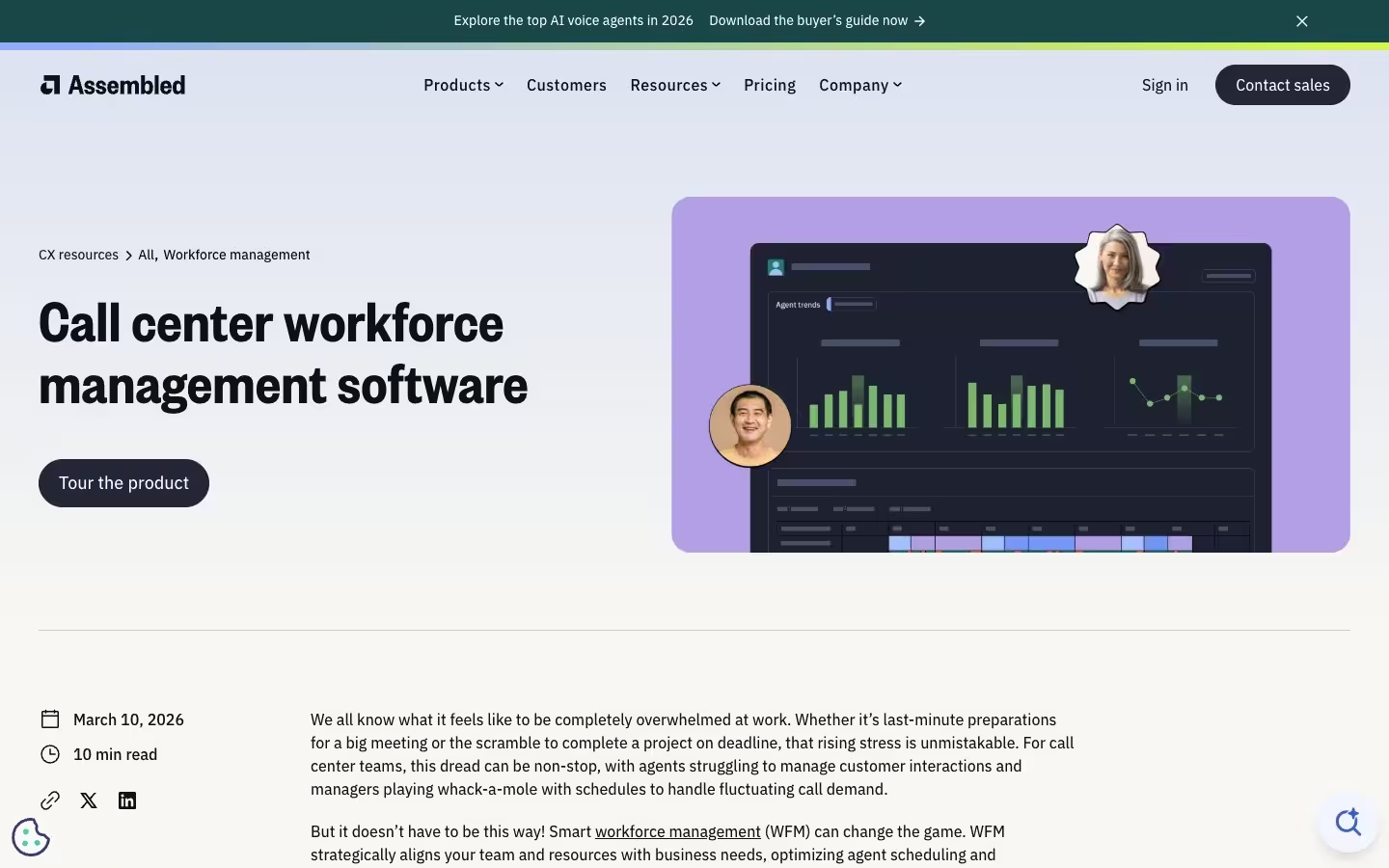
Assembled call center workforce management software provides cloud-based forecasting, automated scheduling, real-time adherence, and intraday management for contact centers using multiple CCaaS, CRM, HR, and collaboration systems. Pre-built integrations, APIs, and data exports support workforce planning and WFM data access across a multi-vendor contact center stack.
Assembled Call Center Workforce Management (WFM) Deployment Models
| WFM Deployment Model | Description | Assembled Classification |
|---|---|---|
| CCaaS-Embedded WFM | WFM native to a CCaaS suite | — |
| WEM Suite WFM | WFM bundled in a workforce engagement suite | — |
| Standalone WFM Specialist | Purpose-built WFM with open integrations | ✅ |
| Cloud-Native WFM | API-first WFM for multi-provider contact centers | ✅ |
Assembled Call Center Workforce Management (WFM) Software Features
| WFM Software Feature | Feature Description | Assembled |
|---|---|---|
| Omnichannel Forecasting | Demand forecasting across voice and digital channels | ✅ |
| Automated Scheduling & Optimization | Schedule generation from demand, skills, availability, and labor rules | ✅ |
| Real-Time Adherence Monitoring | Live comparison of agent status with scheduled activity | ✅ |
| Intraday Management | Demand reforecasting and schedule adjustment throughout the day | ✅ |
| Agent Self-Service | Shift bidding, swaps, time-off requests, and schedule visibility | ✅ |
| Shrinkage & Capacity Planning | Long-range staffing requirements using shrinkage and forecasted demand | ✅ |
| Multi-Skill & Multi-Site Support | Scheduling across sites, skills, channels, and time zones | ✅ |
| Integration Openness | Connections with ACD, CCaaS, CRM, QA, and performance management software | ✅ |
| Data Portability & API Access | Scheduling, adherence, and forecasting data through APIs, webhooks, and exports | ✅ |
| AI-Powered Automation | AI forecast selection, schedule optimization, and intraday recommendations | ✅ |
| Reporting & Analytics | Historical and real-time WFM dashboards | ✅ |
Standout Features and Capabilities of Assembled
- Omnichannel Forecasting: Forecasts demand across voice, chat, email, messaging, social, and back-office queues, with options to import custom forecasts through API or CSV.
- Automated Schedule Generation: Builds schedules from demand forecasts, working hours, labor requirements, coverage needs, and scheduling rules.
- Open WFM Data Access: Provides API access to forecasts, schedules, working-hour patterns, adherence results, and workforce reports.
Best Fit: Who Should Use Assembled
- Contact centers using multiple CCaaS, CRM, HR, or collaboration systems that need purpose-built WFM outside a provider suite
- Workforce teams scheduling live and asynchronous channels across queues, skills, sites, and time zones
- Teams that need forecast, schedule, and adherence data available to external analytics or performance management systems
Assembled Considerations
- AI-powered forecasting, schedule generation, custom APIs, and vendor management vary by plan or add-on
- Site-level staffing requirements may require uploaded requirements rather than automatic allocation across sites
- Assembled focuses on WFM, requiring buyers to plan how scheduling and adherence data will connect with existing quality, coaching, and performance management systems
Assembled Call Center Workforce Management (WFM) Software Overview
Assembled WFM fits contact centers that need purpose-built, cloud-native forecasting, scheduling, adherence, and WFM data access across a multi-vendor contact center stack.
5. Five9 Workforce Management Software
Five9 call center workforce management software provides multi-skill, multi-channel forecasting, automated scheduling, real-time adherence, intraday management, and agent self-service within the Five9 CCaaS and WEM environment. Essentials supports growing contact centers, while Enterprise adds broader forecasting, scheduling, reporting, and multi-location capabilities.
Five9 Call Center Workforce Management (WFM) Deployment Models
| WFM Deployment Model | Description | Five9 Classification |
|---|---|---|
| CCaaS-Embedded WFM | WFM native to a CCaaS suite | ✅ |
| WEM Suite WFM | WFM bundled in a workforce engagement suite | ✅ |
| Standalone WFM Specialist | Purpose-built WFM with open integrations | — |
| Cloud-Native WFM | API-first WFM for multi-provider contact centers | — |
Five9 Call Center Workforce Management (WFM) Software Features
| WFM Software Feature | Feature Description | Five9 |
|---|---|---|
| Omnichannel Forecasting | Demand forecasting across voice and digital channels | ✅ |
| Automated Scheduling & Optimization | Schedule generation from demand, skills, availability, and labor rules | ✅ |
| Real-Time Adherence Monitoring | Live comparison of agent status with scheduled activity | ✅ |
| Intraday Management | Demand reforecasting and schedule adjustment throughout the day | ✅ |
| Agent Self-Service | Shift bidding, swaps, time-off requests, and schedule visibility | ✅ |
| Shrinkage & Capacity Planning | Long-range staffing requirements using shrinkage and forecasted demand | ⚠️ |
| Multi-Skill & Multi-Site Support | Scheduling across sites, skills, channels, and time zones | ✅ |
| Integration Openness | Connections with ACD, CCaaS, CRM, QA, and performance management software | ✅ |
| Data Portability & API Access | Scheduling, adherence, and forecasting data through APIs, webhooks, and exports | ⚠️ |
| AI-Powered Automation | AI forecast selection, schedule optimization, and intraday recommendations | ⚠️ |
| Reporting & Analytics | Historical and real-time WFM dashboards | ✅ |
Standout Features and Capabilities of Five9
- Multi-Skill and Multi-Channel Forecasting: Forecasts inbound, outbound, blended, voice, and digital demand using multiple forecasting methods and what-if analysis.
- Intraday Schedule Management: Compares staffing with plan interval by interval, automatically reforecasts demand, and supports schedule changes with agent notifications.
- Agent Self-Service: Gives agents web and mobile access to schedules, adherence, shift bidding, time-off requests, voluntary overtime, and schedule-change notifications.
Best Fit: Who Should Use Five9
- Contact centers using Five9 CCaaS that want WFM within the same provider environment
- Growing contact centers considering Essentials for core WFM or Enterprise for multi-location and more complex forecasting requirements
- Workforce teams managing multi-skill, multi-channel demand with frequent intraday schedule changes
Five9 Considerations
- Compare Essentials and Enterprise against your contact center size, forecasting complexity, scheduling requirements, and reporting needs
- If your contact center uses a CCaaS platform other than Five9, confirm support for your CCaaS deployment, queue and agent-state data, and real-time adherence requirements
- Confirm whether Five9 can send schedules, forecasts, adherence results, and staffing requirements to your analytics, payroll, QA, and performance management systems in the required format and cadence
Five9 Call Center Workforce Management (WFM) Software Overview
Five9 WFM fits contact centers using Five9 CCaaS or WEM that want forecasting, scheduling, adherence, intraday management, and agent self-service within the same provider environment.
Compare Five9 Alternatives Across 13 Software Categories
6. Aspect Workforce Management Software
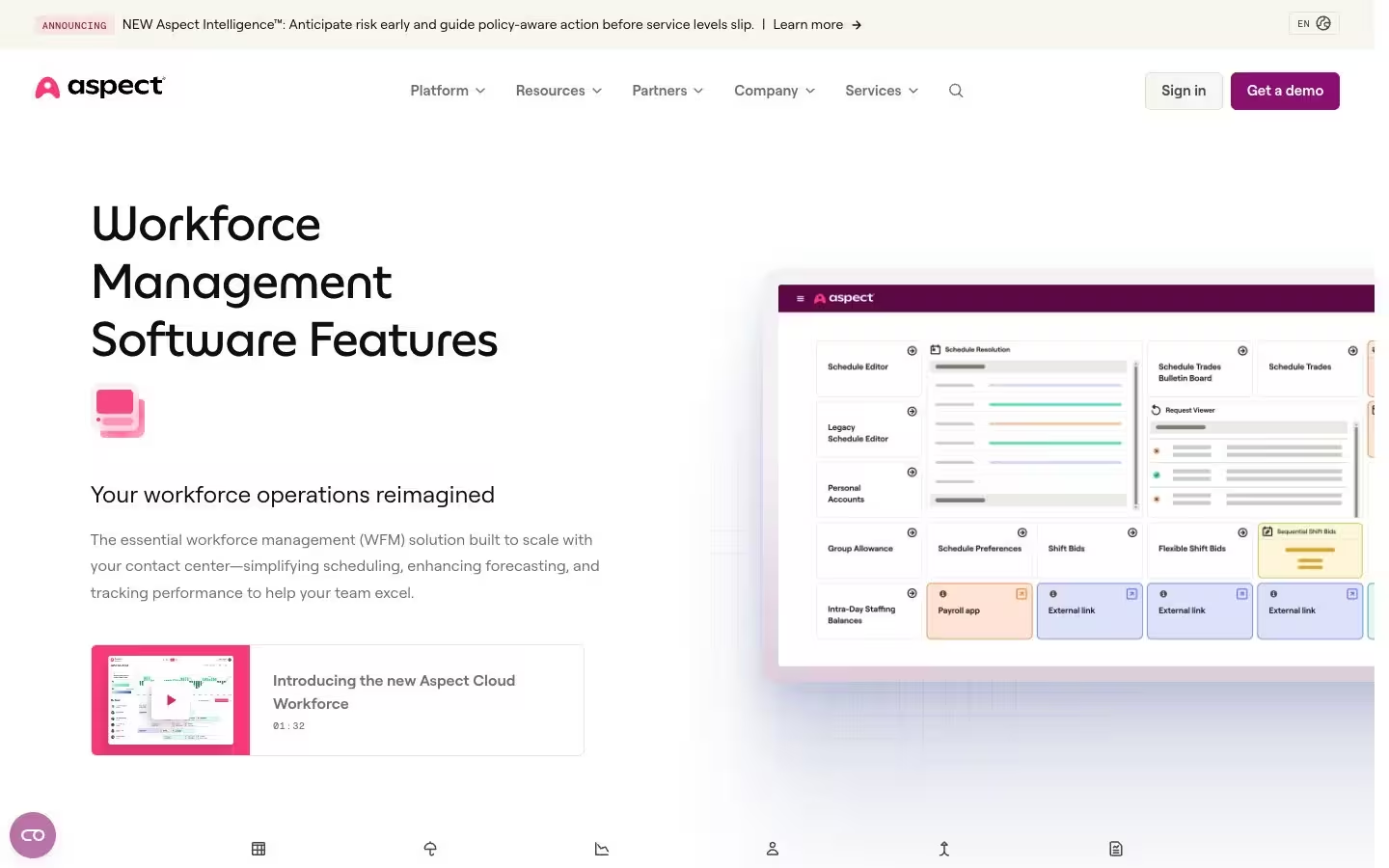
Aspect call center workforce management software provides forecasting, dynamic scheduling, real-time adherence, intraday monitoring, and employee self-service across on-premises, hosted, private-cloud, and public-cloud deployments. Aspect Workforce, the WFM application within WorkforceOS, connects with existing CCaaS, HR, payroll, and BI systems through APIs and connectors.
Aspect Call Center Workforce Management (WFM) Deployment Models
| WFM Deployment Model | Description | Aspect Classification |
|---|---|---|
| CCaaS-Embedded WFM | WFM native to a CCaaS suite | — |
| WEM Suite WFM | WFM bundled in a workforce engagement suite | ✅ |
| Standalone WFM Specialist | Purpose-built WFM with open integrations | ✅ |
| Cloud-Native WFM | API-first WFM for multi-provider contact centers | — |
Aspect Call Center Workforce Management (WFM) Software Features
| WFM Software Feature | Feature Description | Aspect |
|---|---|---|
| Omnichannel Forecasting | Demand forecasting across voice and digital channels | ✅ |
| Automated Scheduling & Optimization | Schedule generation from demand, skills, availability, and labor rules | ✅ |
| Real-Time Adherence Monitoring | Live comparison of agent status with scheduled activity | ✅ |
| Intraday Management | Demand reforecasting and schedule adjustment throughout the day | ✅ |
| Agent Self-Service | Shift bidding, swaps, time-off requests, and schedule visibility | ✅ |
| Shrinkage & Capacity Planning | Long-range staffing requirements using shrinkage and forecasted demand | ✅ |
| Multi-Skill & Multi-Site Support | Scheduling across sites, skills, channels, and time zones | ✅ |
| Integration Openness | Connections with ACD, CCaaS, CRM, QA, and performance management software | ✅ |
| Data Portability & API Access | Scheduling, adherence, and forecasting data through APIs, webhooks, and exports | ✅ |
| AI-Powered Automation | AI forecast selection, schedule optimization, and intraday recommendations | ✅ |
| Reporting & Analytics | Historical and real-time WFM dashboards | ✅ |
Standout Features and Capabilities of Aspect
- Deployment Flexibility: Supports on-premises, hosted, private-cloud, and public-cloud WFM deployments for contact centers with data-residency, security, or infrastructure requirements.
- Enterprise Scheduling: Manages multi-site, multi-skill, BPO, unionized, and cross-time-zone scheduling with labor rules, capacity constraints, and employee preferences.
- Aspect Intelligence: Applies AI forecasting, automatic reforecasting, predictive staffing analysis, and adherence-triggered schedule corrections within workforce planning.
Best Fit: Who Should Use Aspect
- Enterprise contact centers and BPOs managing multi-site, multi-skill scheduling across regions and time zones
- Financial services, healthcare, telecommunications, and government contact centers with specific deployment or data-residency requirements
- Contact centers that need WFM independent of their CCaaS vendor, with connections to existing HR, payroll, BI, and contact center systems
Aspect Considerations
- If you are moving from Alvaria Workforce Classic, confirm which capabilities remain in existing WorkforceOS interfaces and which require Aspect Cloud Workforce
- Aspect supports multiple deployment models, so confirm feature availability and release cadence across on-premises, hosted, private-cloud, and public-cloud environments
- Aspect Intelligence includes released, beta, and roadmap capabilities; confirm availability for AI forecasting, intraday automation, schedule corrections, and coaching within your deployment
Aspect Call Center Workforce Management (WFM) Software Overview
Aspect WFM fits enterprise contact centers and BPOs that need multi-site, multi-skill forecasting and scheduling across on-premises, hosted, private-cloud, or public-cloud deployments.
7. Amazon Connect Workforce Management Software
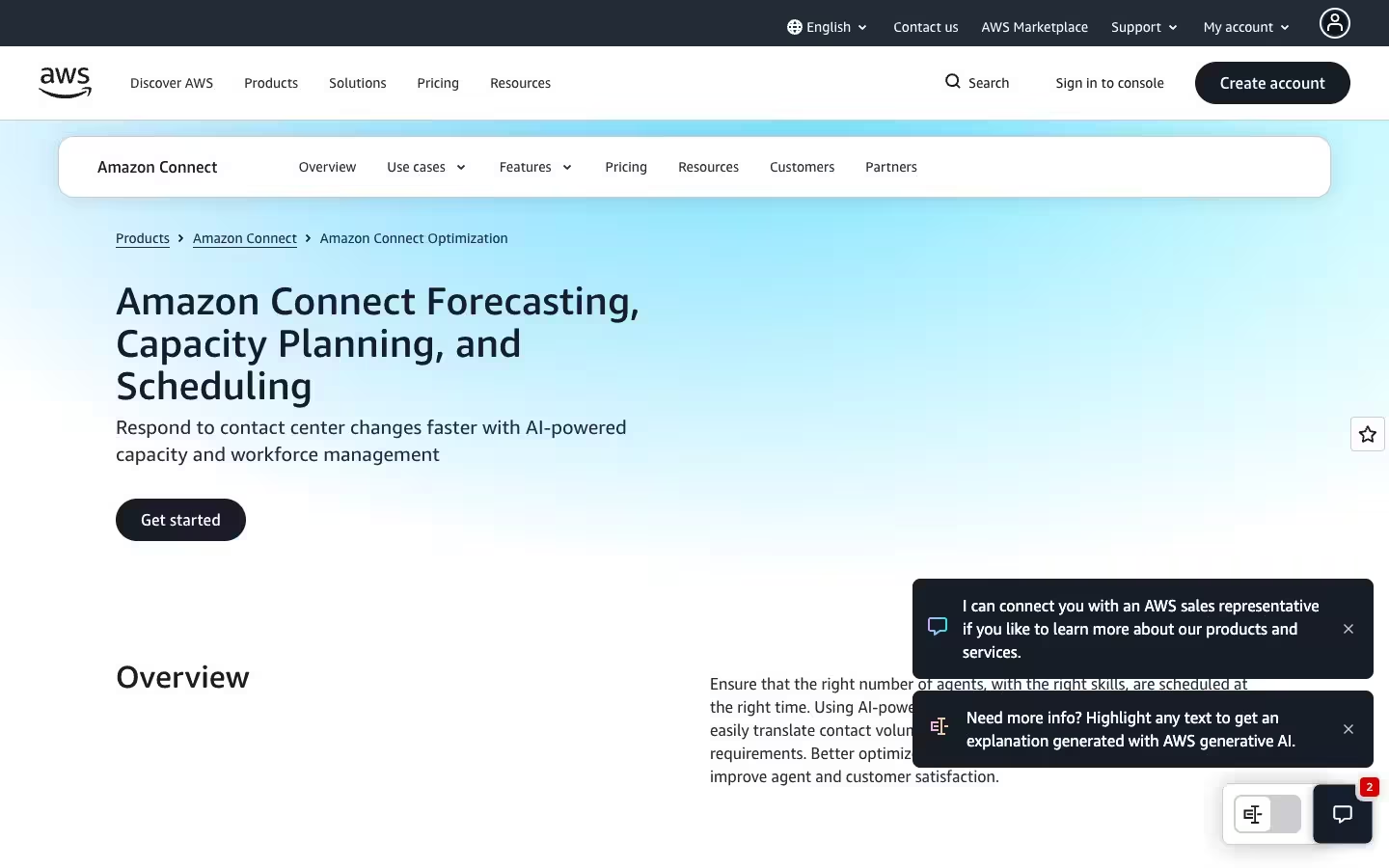
Amazon Connect call center workforce management software provides AI-powered forecasting, capacity planning, scheduling, real-time adherence, and agent self-service inside Amazon Connect Customer. Forecasting covers voice, chat, tasks, and email, while capacity plans model staffing requirements up to 64 weeks using forecast demand, shrinkage, and available FTEs.
Amazon Connect Call Center Workforce Management (WFM) Deployment Models
| WFM Deployment Model | Description | Amazon Connect Classification |
|---|---|---|
| CCaaS-Embedded WFM | WFM native to a CCaaS suite | ✅ |
| WEM Suite WFM | WFM bundled in a workforce engagement suite | — |
| Standalone WFM Specialist | Purpose-built WFM with open integrations | — |
| Cloud-Native WFM | API-first WFM for multi-provider contact centers | — |
Amazon Connect Call Center Workforce Management (WFM) Software Features
| WFM Software Feature | Feature Description | Amazon Connect |
|---|---|---|
| Omnichannel Forecasting | Demand forecasting across voice and digital channels | ✅ |
| Automated Scheduling & Optimization | Schedule generation from demand, skills, availability, and labor rules | ✅ |
| Real-Time Adherence Monitoring | Live comparison of agent status with scheduled activity | ✅ |
| Intraday Management | Demand reforecasting and schedule adjustment throughout the day | ✅ |
| Agent Self-Service | Shift bidding, swaps, time-off requests, and schedule visibility | ✅ |
| Shrinkage & Capacity Planning | Long-range staffing requirements using shrinkage and forecasted demand | ✅ |
| Multi-Skill & Multi-Site Support | Scheduling across sites, skills, channels, and time zones | ✅ |
| Integration Openness | Connections with ACD, CCaaS, CRM, QA, and performance management software | ⚠️ |
| Data Portability & API Access | Scheduling, adherence, and forecasting data through APIs, webhooks, and exports | ✅ |
| AI-Powered Automation | AI forecast selection, schedule optimization, and intraday recommendations | ✅ |
| Reporting & Analytics | Historical and real-time WFM dashboards | ✅ |
Standout Features and Capabilities of Amazon Connect
- Omnichannel Workforce Forecasting: Generates short-term, long-term, and intraday forecasts across voice, chat, tasks, and email, with intraday forecasts updated every 15 minutes
- Long-Term Capacity Planning: Models FTE requirements up to 64 weeks using forecast demand, future shrinkage, available staffing, service goals, and what-if scenarios
- Workforce Scheduling Data: Makes shifts, time off, staffing groups, demand groups, schedule metrics, and scheduling configurations available through the Connect Customer analytics data lake
Best Fit: Who Should Use Amazon Connect
- Contact centers already using Amazon Connect Customer that want forecasting, capacity planning, scheduling, adherence, and agent self-service inside their CCaaS suite
- Workforce planning teams scheduling voice, chat, tasks, and email through shared forecasts and multi-skill demand groups
- Data teams that need WFM scheduling and staffing data available through the Connect Customer analytics data lake
Amazon Connect Considerations
- If your contact center uses another CCaaS platform, Amazon Connect WFM requires moving routing, queues, agent profiles, and workforce data into Amazon Connect Customer
- Intraday forecasts require at least 5,000 unique contacts per queue-channel per week during the previous four weeks, leaving lower-volume queues without intraday forecasting
- Forecasting and agent scheduling cost $27 per forecasted or scheduled agent per month after the 90-day trial
Amazon Connect Call Center Workforce Management (WFM) Software Overview
Amazon Connect WFM fits contact centers already using Amazon Connect Customer that need native omnichannel forecasting, long-term capacity planning, multi-skill scheduling, adherence, agent self-service, and access to WFM data through the Connect Customer analytics data lake.
8. RingCX Workforce Management Software
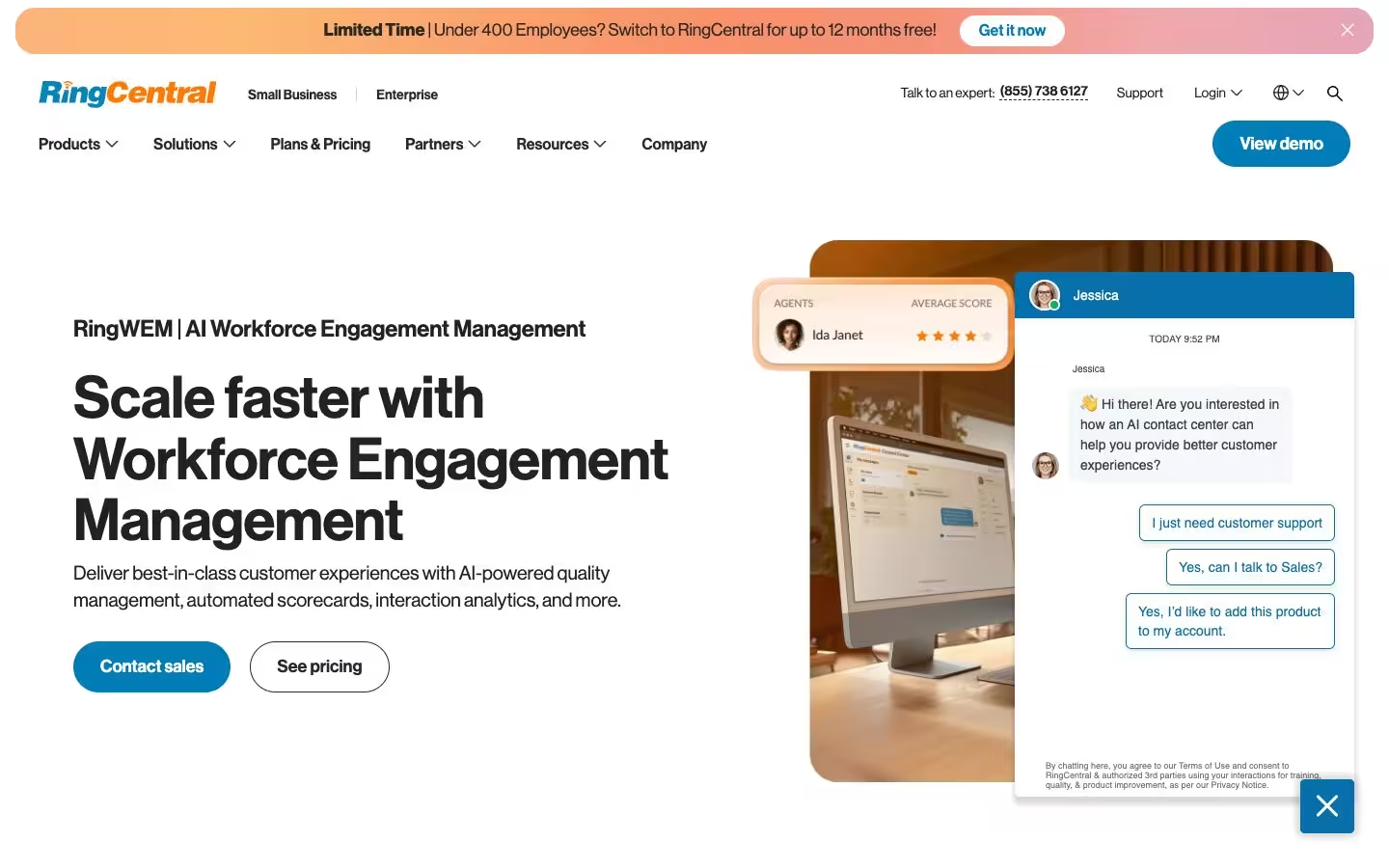
RingCX call center workforce management software provides AI forecasting, scheduling, intraday management, real-time adherence, attendance monitoring, and agent self-service through RingWEM. RingWEM packages AI WFM with quality management, interaction analytics, surveys, and screen recording, while RingCentral offers the suite with RingCX or as a standalone purchase.
RingCX Call Center Workforce Management (WFM) Deployment Models
| WFM Deployment Model | Description | RingCX Classification |
|---|---|---|
| CCaaS-Embedded WFM | WFM native to a CCaaS suite | ✅ |
| WEM Suite WFM | WFM bundled in a workforce engagement suite | ✅ |
| Standalone WFM Specialist | Purpose-built WFM with open integrations | — |
| Cloud-Native WFM | API-first WFM for multi-provider contact centers | — |
RingCX Call Center Workforce Management (WFM) Software Features
| WFM Software Feature | Feature Description | RingCX |
|---|---|---|
| Omnichannel Forecasting | Demand forecasting across voice and digital channels | ✅ |
| Automated Scheduling & Optimization | Schedule generation from demand, skills, availability, and labor rules | ✅ |
| Real-Time Adherence Monitoring | Live comparison of agent status with scheduled activity | ✅ |
| Intraday Management | Demand reforecasting and schedule adjustment throughout the day | ✅ |
| Agent Self-Service | Shift bidding, swaps, time-off requests, and schedule visibility | ✅ |
| Shrinkage & Capacity Planning | Long-range staffing requirements using shrinkage and forecasted demand | ⚠️ |
| Multi-Skill & Multi-Site Support | Scheduling across sites, skills, channels, and time zones | ⚠️ |
| Integration Openness | Connections with ACD, CCaaS, CRM, QA, and performance management software | ⚠️ |
| Data Portability & API Access | Scheduling, adherence, and forecasting data through APIs, webhooks, and exports | ❌ |
| AI-Powered Automation | AI forecast selection, schedule optimization, and intraday recommendations | ✅ |
| Reporting & Analytics | Historical and real-time WFM dashboards | ✅ |
Standout Features and Capabilities of RingCX
- Forecasting and Scenario Planning: Uses multiple forecasting engines to generate demand forecasts, compare forecast models, and test staffing scenarios
- Intraday Schedule Adjustment: Compares forecasted, scheduled, and projected staffing levels, recommends coverage changes, and sends schedule offers to qualified agents
- Agent Scheduling Self-Service: Gives agents mobile access to schedules, shift bidding, shift exchanges, time-off requests, and additional-hours offers
Best Fit: Who Should Use RingCX
- Contact centers using RingCX that want forecasting, scheduling, adherence, and agent self-service inside RingWEM
- Workforce teams managing intraday staffing changes, skill-based schedules, attendance, and mobile schedule requests
- CX leaders evaluating WFM alongside quality management, interaction analytics, surveys, and screen recording from one WEM vendor
RingCX Considerations
- Confirm whether AI WFM is included in your RingCX package or requires RingWEM or RingCX Elite
- If your contact center uses another CCaaS platform, confirm which routing, interaction, agent-state, and historical data RingWEM can ingest before purchasing the suite separately
- Confirm long-range capacity-planning horizons, shrinkage inputs, and access to forecast, schedule, and adherence data through APIs or exports
RingCX Call Center Workforce Management (WFM) Software Overview
RingCX WFM fits contact centers using RingCX or evaluating RingWEM as a standalone WEM suite for AI forecasting, scheduling, intraday management, adherence, attendance tracking, and agent self-service.
9. Peopleware Workforce Management Software
Peopleware call center workforce management software provides standalone, cloud-native forecasting, capacity planning, scheduling, intraday management, adherence, time-off, and agent self-service across contact center platforms. Native connectors, standard data interfaces, and REST APIs connect ACD, CCaaS, HR, payroll, CRM, and client data, while predictive AI generates forecasts up to 24 months and scheduling optimization covers multiple skills, sites, channels, and time zones.
Peopleware Call Center Workforce Management (WFM) Deployment Models
| WFM Deployment Model | Description | Peopleware Classification |
|---|---|---|
| CCaaS-Embedded WFM | WFM native to a CCaaS suite | — |
| WEM Suite WFM | WFM bundled in a workforce engagement suite | — |
| Standalone WFM Specialist | Purpose-built WFM with open integrations | ✅ |
| Cloud-Native WFM | API-first WFM for multi-provider contact centers | ✅ |
Peopleware Call Center Workforce Management (WFM) Software Features
| WFM Software Feature | Feature Description | Peopleware |
|---|---|---|
| Omnichannel Forecasting | Demand forecasting across voice and digital channels | ✅ |
| Automated Scheduling & Optimization | Schedule generation from demand, skills, availability, and labor rules | ✅ |
| Real-Time Adherence Monitoring | Live comparison of agent status with scheduled activity | ✅ |
| Intraday Management | Demand reforecasting and schedule adjustment throughout the day | ✅ |
| Agent Self-Service | Shift bidding, swaps, time-off requests, and schedule visibility | ✅ |
| Shrinkage & Capacity Planning | Long-range staffing requirements using shrinkage and forecasted demand | ✅ |
| Multi-Skill & Multi-Site Support | Scheduling across sites, skills, channels, and time zones | ✅ |
| Integration Openness | Connections with ACD, CCaaS, CRM, QA, and performance management software | ✅ |
| Data Portability & API Access | Scheduling, adherence, and forecasting data through APIs, webhooks, and exports | ✅ |
| AI-Powered Automation | AI forecast selection, schedule optimization, and intraday recommendations | ⚠️ |
| Reporting & Analytics | Historical and real-time WFM dashboards | ✅ |
Standout Features and Capabilities of Peopleware
- 24-Month Omnichannel Forecasting: Generates self-learning forecasts up to two years ahead at 15-minute intervals across calls, chat, email, and social channels
- Multi-Skill and Multi-Site Scheduling: Optimizes schedules across skills, sites, channels, time zones, agent preferences, labor rules, and service goals
- WFM Data Integration: Connects workforce data through native cloud integrations, CSV and ODBC interfaces, and REST APIs for custom workflows
Best Fit: Who Should Use Peopleware
- Contact centers that need WFM independent of a CCaaS or WEM suite
- BPOs and workforce teams planning across multiple clients, sites, skills, languages, channels, and time zones
- Data teams connecting workforce planning with ACD, CCaaS, HR, payroll, CRM, or client systems through APIs and standard interfaces
Peopleware Considerations
- Confirm which forecasting, capacity-planning, scheduling, intraday, time-off, time-and-attendance, and API capabilities are included in your Peopleware package
- If your requirements extend into quality assurance, coaching, conversation intelligence, or performance management, plan for separate software and data integration
- Intraday management supports live schedule changes and alerts; confirm whether AI-generated intraday recommendations are available in your deployment
Peopleware Call Center Workforce Management (WFM) Software Overview
Peopleware WFM fits contact centers and BPOs that need CCaaS-independent forecasting, capacity planning, multi-skill and multi-site scheduling, intraday management, agent self-service, and open workforce-data integration.
10. Talkdesk Workforce Management Software
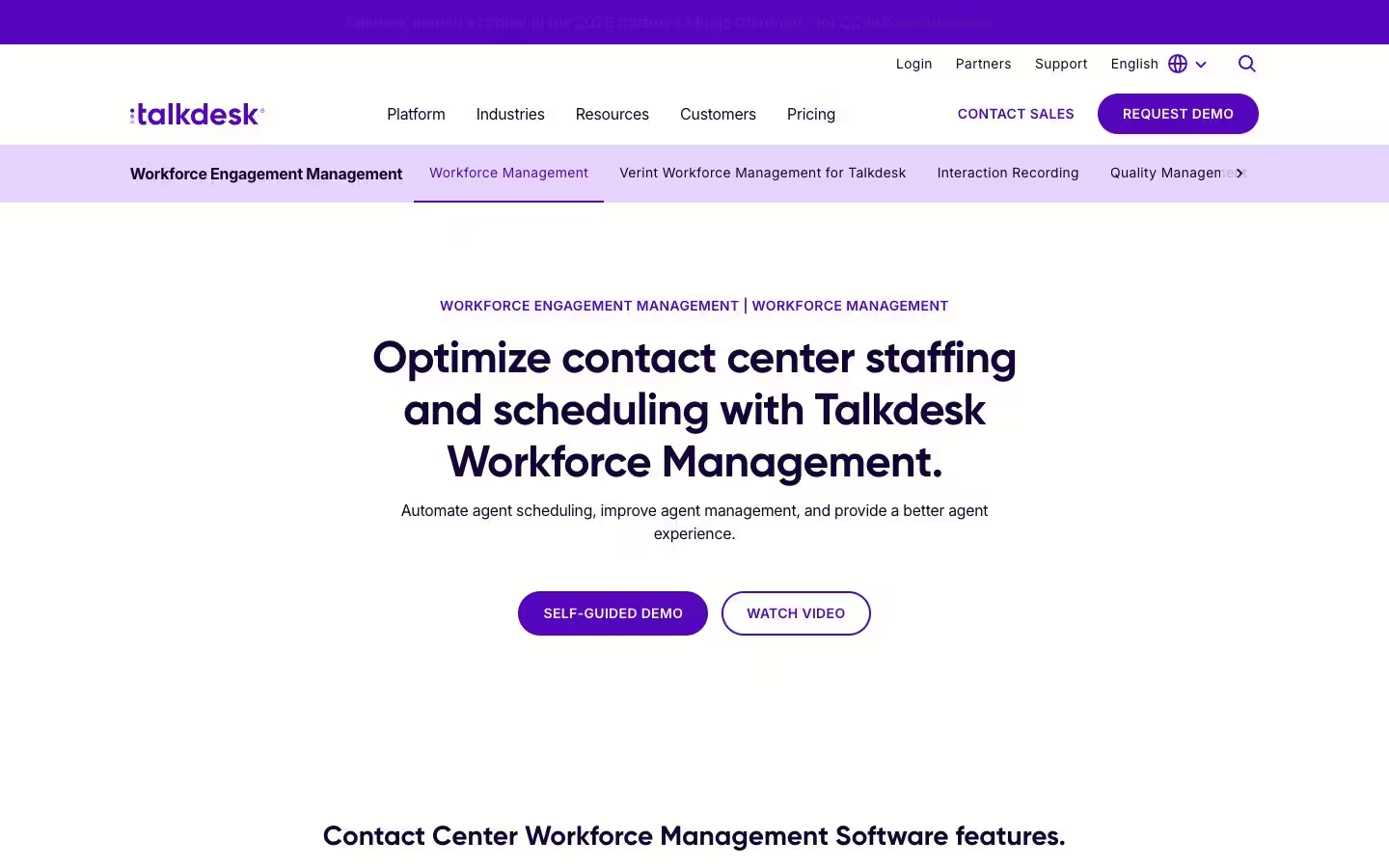
Talkdesk call center workforce management software provides AI forecasting, skills-based scheduling, intraday reforecasting, real-time adherence, and agent schedule requests inside Talkdesk Workforce Engagement Management. Talkdesk WFM uses Talkdesk queue history and live metrics for native forecasting, while external queue history can be imported without equivalent live-metric collection.
Talkdesk Call Center Workforce Management (WFM) Deployment Models
| WFM Deployment Model | Description | Talkdesk Classification |
|---|---|---|
| CCaaS-Embedded WFM | WFM native to a CCaaS suite | ✅ |
| WEM Suite WFM | WFM bundled in a workforce engagement suite | ✅ |
| Standalone WFM Specialist | Purpose-built WFM with open integrations | — |
| Cloud-Native WFM | API-first WFM for multi-provider contact centers | — |
Talkdesk Call Center Workforce Management (WFM) Software Features
| WFM Software Feature | Feature Description | Talkdesk |
|---|---|---|
| Omnichannel Forecasting | Demand forecasting across voice and digital channels | ✅ |
| Automated Scheduling & Optimization | Schedule generation from demand, skills, availability, and labor rules | ✅ |
| Real-Time Adherence Monitoring | Live comparison of agent status with scheduled activity | ✅ |
| Intraday Management | Demand reforecasting and schedule adjustment throughout the day | ✅ |
| Agent Self-Service | Shift bidding, swaps, time-off requests, and schedule visibility | ⚠️ |
| Shrinkage & Capacity Planning | Long-range staffing requirements using shrinkage and forecasted demand | ⚠️ |
| Multi-Skill & Multi-Site Support | Scheduling across sites, skills, channels, and time zones | ⚠️ |
| Integration Openness | Connections with ACD, CCaaS, CRM, QA, and performance management software | ⚠️ |
| Data Portability & API Access | Scheduling, adherence, and forecasting data through APIs, webhooks, and exports | ✅ |
| AI-Powered Automation | AI forecast selection, schedule optimization, and intraday recommendations | ⚠️ |
| Reporting & Analytics | Historical and real-time WFM dashboards | ✅ |
Standout Features and Capabilities of Talkdesk
- Queue-Level Forecasting and Staffing: Forecasts contact volume and average handle time at 15-minute intervals, selects forecast models by queue, and calculates staffing requirements using service goals and shrinkage
- Intraday Reforecasting: Compares forecasted, actual, and projected volume, handle time, staffing, and service levels while refreshing intraday forecasts as new interaction data arrives
- WFM Reporting and API Access: Provides schedule, forecast, and adherence reporting through Talkdesk Explore, with schedule and adherence data available through APIs
Best Fit: Who Should Use Talkdesk
- Contact centers already using Talkdesk CCaaS that want forecasting, scheduling, adherence, and intraday management inside Talkdesk WEM
- Resource planners managing voice and digital queues with skills-based schedules, shrinkage, service goals, and agent schedule requests
- Teams whose forecasting, scheduling, and adherence requirements need to stay inside Talkdesk's CCaaS environment
Talkdesk Considerations
- If your contact center uses another CCaaS platform, external queue history requires dummy Talkdesk ring groups and does not receive Talkdesk live metrics
- What-if forecasting, AI scenario creation, schedule-issue summaries, and recommended actions remain preview capabilities for selected customers
- Schedule and adherence APIs plus WFM reports require Talkdesk Business Intelligence Explore licensing, so confirm API access, forecast export format, and report refresh timing
Talkdesk Call Center Workforce Management (WFM) Software Overview
Talkdesk WFM fits contact centers using Talkdesk CCaaS that need native omnichannel forecasting, skills-based scheduling, intraday management, adherence, and agent schedule requests within Talkdesk WEM.
Connect Your WFM Data to Unified CX and Performance Management
Most WFM providers deliver workforce planning inside a CCaaS or WEM suite or through standalone WFM, leaving provider-native WEM and WFO without access to customer, interaction, and business data held outside that product ecosystem and separating staffing decisions from agent performance, service quality, customer outcomes, and business results.
WFM data can show where workforce performance diverged from plan, but it can’t explain what happened in customer interactions, which behaviors influenced the result, or what managers and agents should do next, with that context being distributed across disconnected systems. A unified CX and performance management platform like AmplifAI brings WFM data from any provider together with CCaaS, CRM, interaction, customer, and business data, applying AI across the unified data to identify performance drivers, deliver role-specific next best actions to frontline agents, team leaders, QA teams, CX leaders, and executives, and measure those actions against agent performance, customer outcomes, and business results.
AmplifAI ingests data from 150+ sources, including WFM systems from NICE, Verint, Genesys, Five9, Talkdesk, RingCentral, Assembled, and Aspect. Speak to a CX leader at AmplifAI about connecting your WFM data to a unified source agnostic WFO and WEM capabilities for measurable performance improvement across agents, teams, sites, and BPO partners.
How to Choose Call Center Workforce Management Software
When choosing call center workforce management software, map how your workforce is planned today, where scheduling and adherence data lives, which roles need to act on workforce findings, and how WFM data is connecting with the rest of your contact center performance monitoring.
- Define your workforce management requirements. Document contact volumes, channels, skills, sites, BPO partners, service-level targets, labor rules, planning horizons, scheduling constraints, adherence gaps, and intraday decisions. Set the forecast accuracy, schedule efficiency, adherence, occupancy, staffing, and service outcomes you expect a WFM software vendor to improve.
- Map WFM to your contact center stack. Review your CCaaS or ACD, CRM, HRIS, payroll, QA, WEM, analytics, and performance management platforms, decide what data needs to feed into your WFM environment.
- Choose the right WFM software deployment model. Use the Types of Call Center Workforce Management Software to determine whether CCaaS-embedded data sharing, WEM-suite breadth, standalone WFM specialization, or cloud-native integration openness best fits your technology stack and workforce requirements.
- Build your feature requirements. Use the Call Center Workforce Management Software Features to separate required capabilities from optional features based on contact center size, channel mix, multi-skill scheduling, multi-site coverage, capacity planning, agent self-service, intraday management, API access, and reporting requirements.
- Test vendor claims against consistent evaluation criteria. Use the Call Center Workforce Management Software Evaluation Criteria throughout discovery, vendor demonstrations, data assessments, and proofs of concept.
- Plan how WFM data supports wider CX and performance management. Confirm where forecasts, schedules, adherence, occupancy, and staffing data flow after WFM vendor deployment, which roles receive the resulting intelligence, and how does workforce data feed into quality, coaching, service levels, customer outcomes, and performance measurement.
Read AmplifAI's guide to the best call center performance management software of 2026 to compare vendors that extend workforce data beyond forecasting, scheduling, and adherence into contact-center-wide performance management.
If you need support comparing call center workforce management software vendors, speak to a CX leader at AmplifAI.
Speak to a CX Leader at AmplifAI
Customer Service and Support Software Buyer's Guides
Our CX specialists at AmplifAI research and evaluate customer service and support software for CX leaders, workforce teams, QA teams, and contact center decision-makers. AmplifAI's buyer's guides show you how vendors compare across software types, category features, best-fit use cases, and considerations, with evaluation criteria you can use when developing your shortlist.
| Software Buyer's Guide | What It Covers | Top Vendors |
|---|---|---|
| Call Center Software | Complete taxonomy of call center software categories with top vendors for customer service and support | AmplifAI, NICE, Genesys, Verint, CallMiner |
| Contact Center as a Service (CCaaS) Software | Full review and comparison of the best Contact Center as a Service (CCaaS) software in 2026 | NICE CXone, Genesys Cloud CX, Five9, Zoom, Talkdesk |
| Call Center CRM Software | Full review and comparison of the best call center CRM software in 2026 | Salesforce Service Cloud, Microsoft Dynamics 365, HubSpot Service Hub, Zoho CRM, Oracle CX |
| Contact Center AI Software | Full review and comparison of the best contact center AI software in 2026 | AmplifAI, Dialpad, Five9, Genesys, NICE |
| AI Agent Management Software | Full review and comparison of the best AI agent management software for customer service in 2026 | AmplifAI, Cresta, NICE, Observe.AI, Kore.ai |
| Call Center Workforce Management Software | Full review and comparison of the best call center workforce management software in 2026 | NICE CXone, Verint, Genesys Cloud, Assembled, Five9 |
| Call Center Speech Analytics Software | Full review and comparison of the best call center speech analytics software in 2026 | AmplifAI, CallMiner, NICE, Observe.AI, Verint |
| Call Center Analytics Software | Full review and comparison of the best call center analytics software in 2026 | AmplifAI, NICE CXone, Verint, Genesys Cloud, CallMiner |
| Call Center QA Software | Full review and comparison of the best call center QA software in 2026 | AmplifAI, CallMiner, Dialpad, NICE, Observe.AI |
| Call Center Performance Management Software | Full review and comparison of the best call center performance management software in 2026 | AmplifAI, Calabrio One, Genesys, NICE, Verint |
| Call Center Coaching Software | Full review and comparison of the best call center coaching software in 2026 | AmplifAI, CallMiner, Dialpad, Genesys, Verint |
| Call Center Gamification Software | Full review and comparison of the best call center gamification software in 2026 | AmplifAI, Centrical, Cresta, Genesys, NICE |
| Customer Insights Software | Full review and comparison of the best customer insights software in 2026 | AmplifAI, CallMiner, Cresta, Observe.AI, Tethr |