
7 Best AI Agent Management Software for Customer Service (2026)
Updated On:
September 17, 2026
Authored By:

Reviewed By:

AI agent management software evaluates and improves deployed customer-facing AI agents across voice and digital channels. CX leaders, customer service leaders, and QA teams use AI agent management software to score interactions, investigate customer journeys and handoffs, assign corrective actions, and measure performance after changes.
Our team of CX specialists reviewed and ranked the 7 best AI agent management software vendors of 2026 based on AI agent management software types, features, evaluation criteria, and customer-service fit:
AI agent management software is still in its infancy while AI agents have moved from pilots deep into frontline customer service. Customer conversations pass between AI agents, human teams, and BPO partners, where a failure in AI agent prompts, knowledge, or routing can surface later in a human handoff or callback. Your contact center needs a unified approach to managing quality and performance for your hybrid workforce.
As you compare AI agent management software vendors, focus especially on whether their interaction evaluations cover AI agents from multiple suppliers or a single provider's AI agents, which CCaaS, CRM, QA, and survey data their scoring draws from, whether they score AI agent and human conversations on variants of a unified quality framework, and how far their corrective workflows reach from findings through post-intervention measurement.
Start your comparison in the three sections below:
- Types of AI Agent Management Software: Where the five AI agent management software types fit your AI agent providers, human teams, and corrective workflows.
- AI Agent Management Software Features: Which capabilities to compare vendors against your data sources, AI agent and human conversation scoring, handoff visibility, and corrective workflow requirements.
- AI Agent Management Software Evaluation Criteria: How to test vendor claims against your contact center size, AI agent portfolio, data environment, quality program, security requirements, and budget.
Our Top Pick for 2026: AmplifAI ranks #1 for AI agent management software, unifying CX data from any source for AI agents from multiple suppliers, human teams, and BPOs in one performance layer. AmplifAI evaluates 100% of human- and AI-handled interactions on variants of one quality framework, routes findings into role-based next best actions, and measures corrective-action effectiveness. AmplifAI won Automation Solution of the Year at the 2026 CCW Excellence Awards and was named a Leading provider in the 2026 CMP Research Prism for Automated QA/QM.
Topics Covered:
- Compare the 7 Best AI Agent Management Software
- What is AI Agent Management Software?
- Types of AI Agent Management Software
- AI Agent Management vs AI Agent Monitoring
- How Do You Know if Your AI Agents Are Working?
- What AI Agent Management Software Needs to Succeed
- AI Agent Management Software Features
- AI Agent Management Software Evaluation Criteria
- Best AI Agent Management Software for Customer Service (2026)
- How to Choose AI Agent Management Software
Compare the 7 Best AI Agent Management Software
Compare the 7 best AI agent management software vendors of 2026. Vendors are ranked based on a combination of their AI agent management software types, features, evaluation criteria, and customer-service fit.
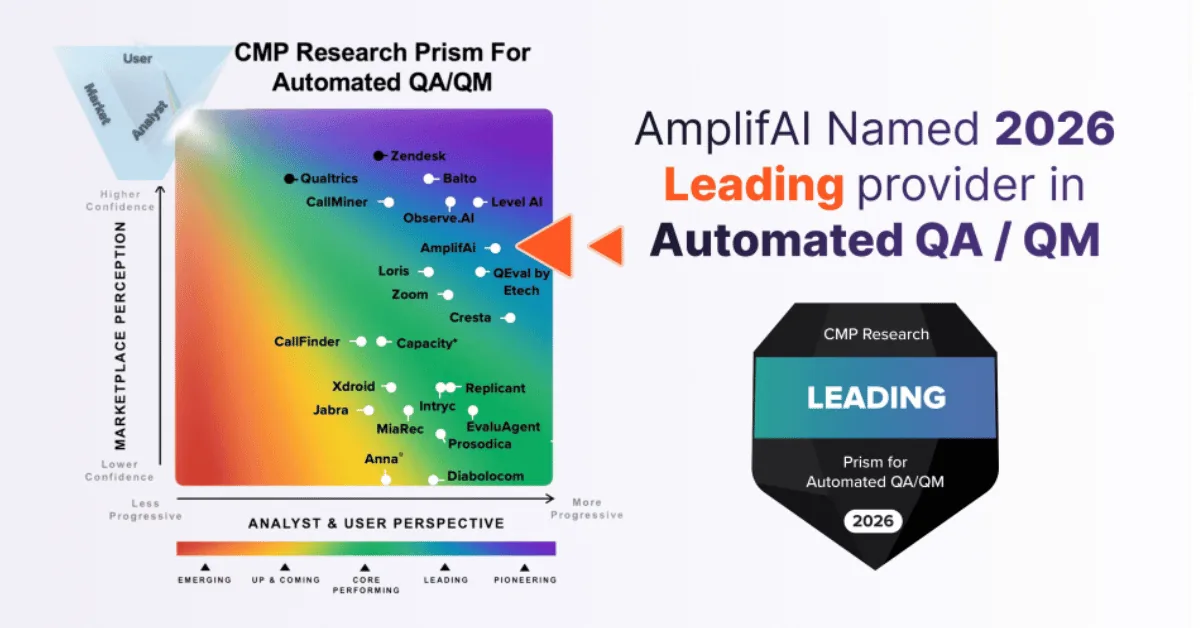
AmplifAI was named a Leading provider in the 2026 CMP Research Prism for Automated QA/QM, earning the highest possible progressive score for integration, user experience, AI accuracy, reporting, and data security.
CMP Research evaluated 22 automated QA/QM solution providers in its Q1 2026 Prism Report, scoring across ten key investment criteria.
Three of the AI agent management software vendors featured in this guide also appear in the CMP Prism evaluation, making the full report a valuable companion for validating your shortlist.
What is AI Agent Management Software?
AI agent management software gives companies oversight and control of how AI agents are created, tested, deployed, monitored, governed, and improved throughout their lifecycle. Available software varies by the lifecycle stages it covers, the AI agents and environments it can access, and whether performance findings feed into corrective action.
In customer service, AI agent management software evaluates and improves deployed customer-facing AI agents across voice and digital channels, with some vendors applying a unified quality framework with scorecard variants for AI agents and human service teams, routing findings into accountable corrective actions, and measuring performance after changes.
Types of AI Agent Management Software
AI agent management software spans five types differentiated by how they provide AI agent management, which AI agents and human teams you can evaluate, and how far their management extends from testing and scoring into corrective workflows.
AI Agent Management vs AI Agent Monitoring
AI agent monitoring tracks an AI agent's production behavior, while AI agent management builds on monitoring through evaluating AI agent conversations against quality and performance standards, routing corrective actions to responsible roles, and measuring those results.
AI agent monitoring is foundational to AI agent deployment in customer-service applications, while AI agent management adds the accountability and outcome measurement layer that confirms whether calibrations and corrective actions improved customer-service outcomes.
How Do You Know if Your AI Agents Are Working?
You can be satisfied with how your AI agents are performing but still have no idea about the experience they provide for your customers. Containment and resolution statuses mark an AI agent conversation as finished, but your customer could be calling back, repeating their issue to your team, or waiting on a promised follow-up. How would you know?
When AI agent scale rests on containment and resolution numbers, you end up routing more of your customers into an experience you can't see. Before expanding which customer interactions your AI agents handle, you need to identify what you don't know about them, where your contact center records the answers, and which AI agent management software can automate the evaluation, corrective workflows, and measurement.
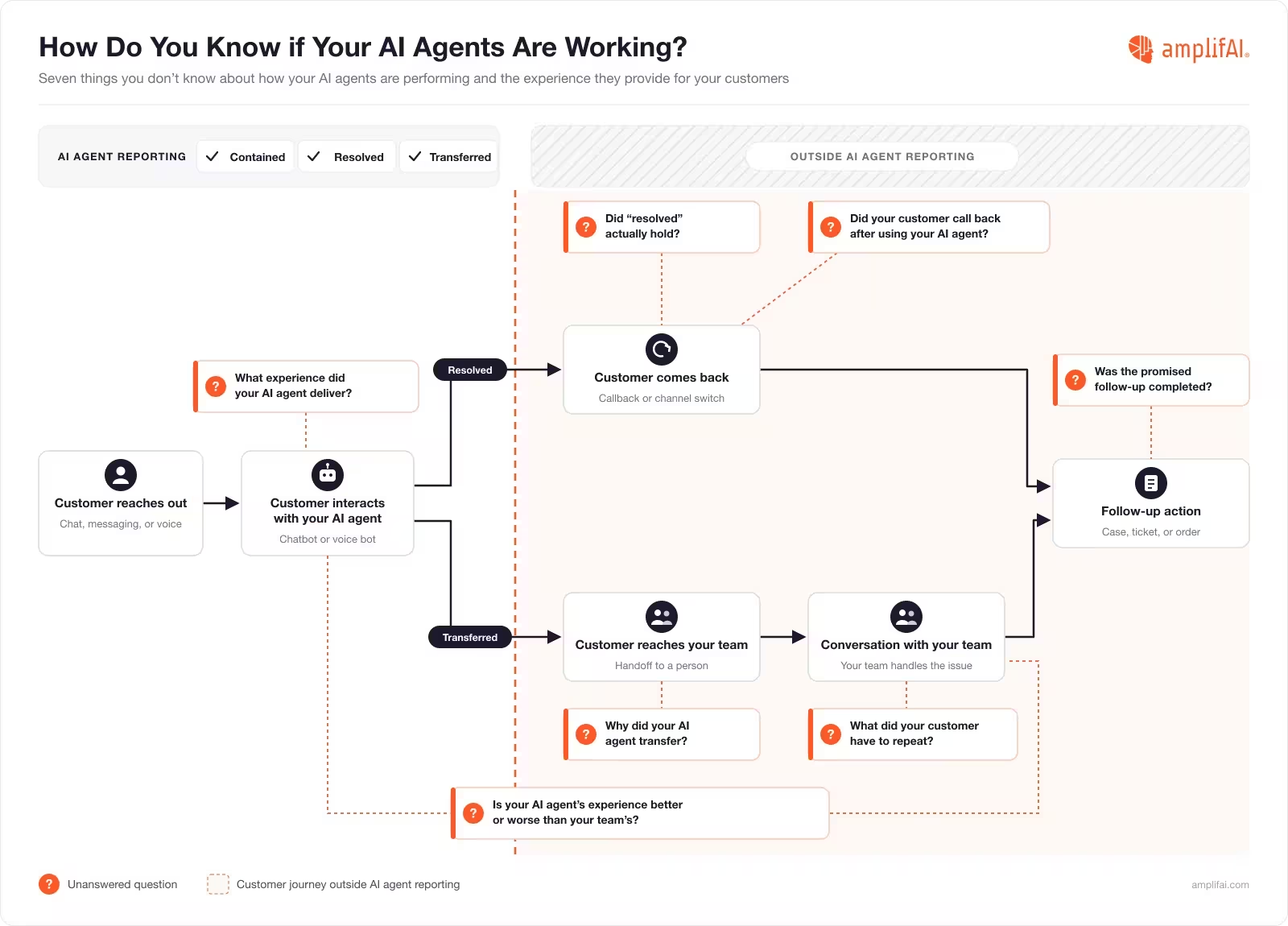
You only know whether your AI agents are working when AI agent conversations, your team's conversations, CCaaS contact history, CRM records, and survey responses connect into a unified customer journey.
What AI Agent Management Software Needs to Succeed
AI agent management software succeeds when its scope matches how your AI agents are deployed, with unified CX data placing each evaluation in business context so accountable workflows can route findings to the responsible team and measure whether corrective actions improved customer and service performance.
AI Agent Management Scope
AI agent management scope depends on whether your team needs AI-agent release assurance, production quality management, or both. Release assurance requires realistic testing and regression coverage before and after deployment changes, while production quality management requires conversation evaluation, calibration, corrective ownership, and performance measurement. A single-vendor deployment may fit within native AI agent management, while a multi-vendor hybrid workforce requires consistent standards across AI agents, human teams, channels, and BPO partners.
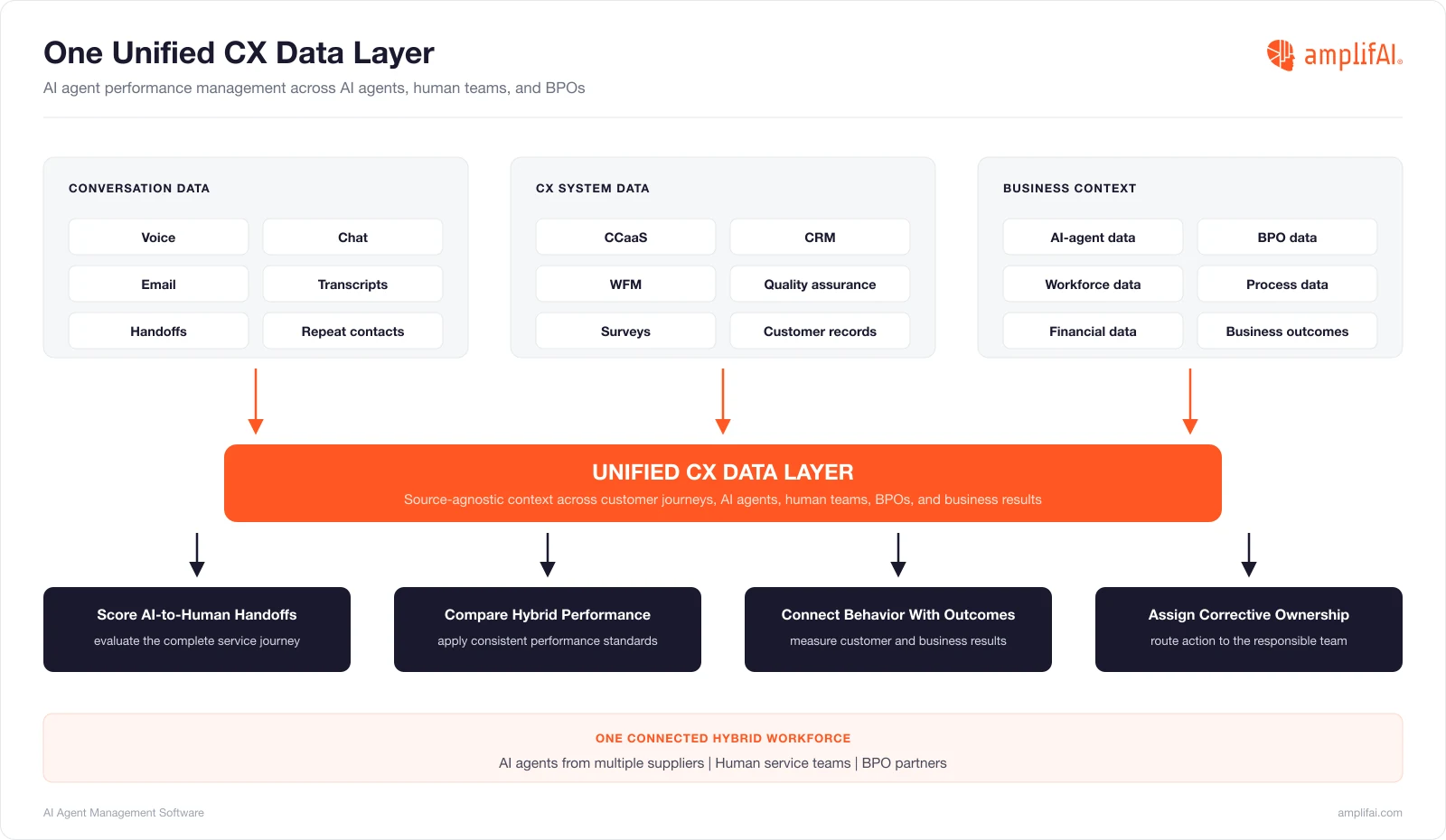
Unified CX Data Layer
Full AI agent performance management depends on a unified CX data layer where conversation data captures what happened during an interaction, while CCaaS, CRM, WFM, QA, survey, AI-agent, BPO, customer, workforce, process, and financial data explain the surrounding conditions connected to a business result. Source-agnostic data unification gives CX leaders the context to score AI-to-human handoffs, compare performance across hybrid workforces, connect behavior with outcomes, and assign corrective action to the responsible team.
Corrective Actions and Outcome Measurement
Evaluation findings only become measurable performance improvements when they feed into an accountable corrective workflow where quality teams can recalibrate a score, CX leaders can change routing, engineers can correct prompts or knowledge, and team leaders can coach human representatives, with post-intervention measurement confirming whether an intervention improved customer and service performanc An di used to 'not ' nae.
AI Agent Management Software Features
Review the AI agent management software features below to compare vendors on how well they connect conversation evaluation with CX data, quality frameworks, corrective workflows, and performance measurement for AI agents and human teams.
AI Agent Management Software Evaluation Criteria
Use the AI agent management software evaluation criteria below to test vendor claims against your contact center size, AI-agent portfolio, data environment, quality program, security requirements, and budget.
Best AI Agent Management Software for Customer Service (2026)
Our reviews of the best AI agent management software vendors of 2026 were ranked by our team of CX specialists based on AI agent management software types, features, evaluation criteria, and customer-service fit. Vendor reviews include type classification, supported capabilities, best-fit use cases, and considerations.
Editor's note: Vendor reviews apply software types, features, and evaluation criteria defined in this guide to publicly available product information, with rankings updated as capabilities change and new vendors emerge.
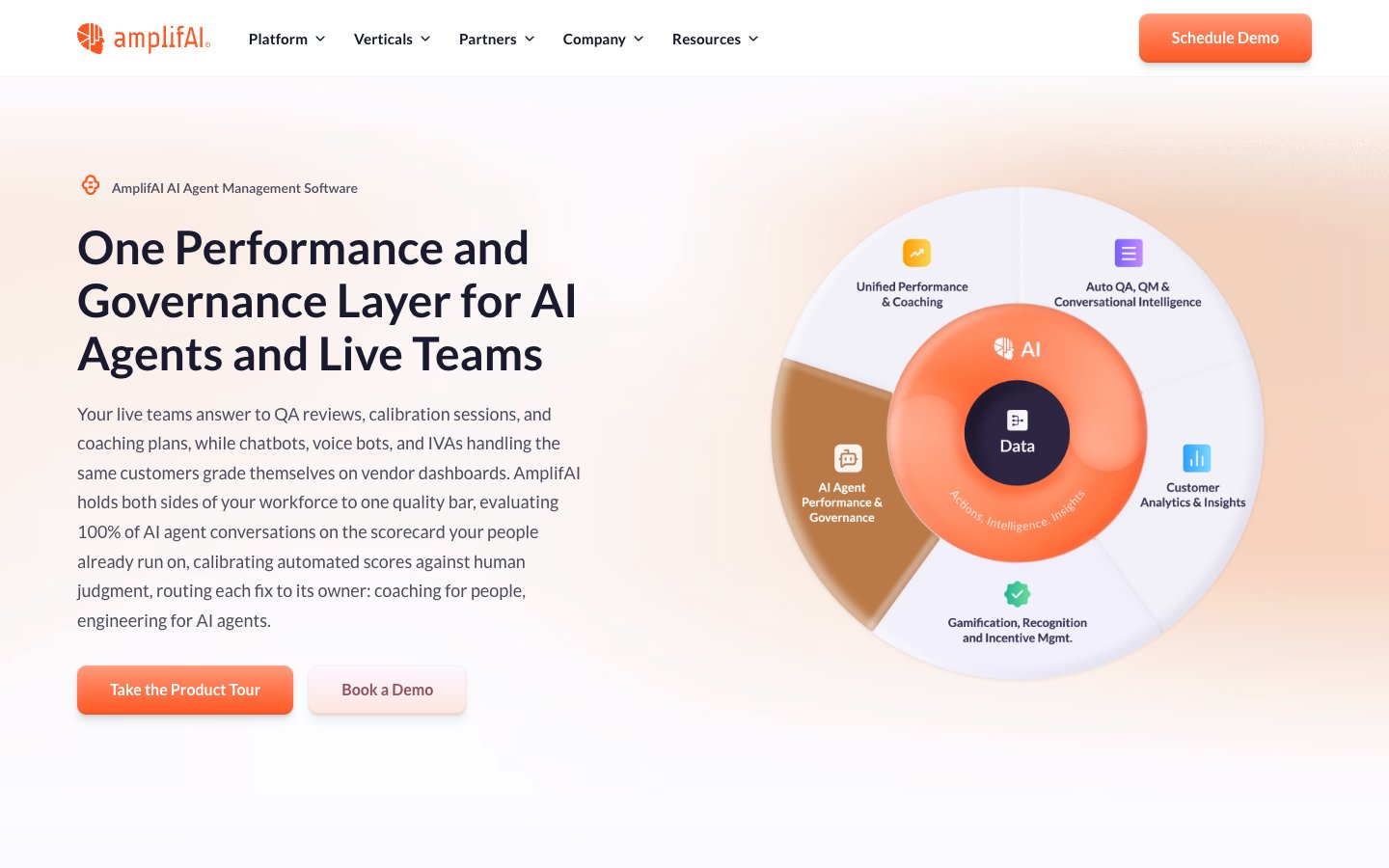
AmplifAI AI agent management software is a unified CX performance management and conversation intelligence suite evaluating 100% of AI- and human-handled customer interactions across voice and digital channels, built upon a source-agnostic data foundation spanning 150+ sources, including CCaaS, CRM, WFM, QA, surveys, AI agents, and business records. AmplifAI applies a unified quality framework with scorecard variants for AI agents from multiple vendors, human teams, BPOs, channels, and customer journeys, feeding findings into role-based next best actions for the teams responsible for prompts, knowledge, routing, quality, and coaching, and measures whether interventions improved customer service performance.
AmplifAI won Automation Solution of the Year at the 2026 CCW Excellence Awards, named a Leading provider in the 2026 CMP Research Prism for Automated QA/QM.
AmplifAI AI Agent Management Software Types
AmplifAI AI Agent Management Software Features
Standout Features and Capabilities of AmplifAI
- Source-Agnostic CX Data Unification: Unifies structured and unstructured data from 150+ sources across CCaaS, CRM, WFM, QA, surveys, conversations, AI-agent environments, BPOs, homegrown applications, and business records in one CX performance layer powering human and AI conversation intelligence.
- Unified Human and AI Quality and Performance Standards: Applies company-defined scorecards, behaviors, KPIs, weights, auto-fails, thresholds, and evaluation rules across human and AI agents, with quality management and calibration aligning automated scores against human judgment.
- Cross-Vendor AI Agent Quality Evaluation: Evaluates customer-facing AI agents from multiple suppliers against shared quality standards, giving CX leaders independent performance visibility across the AI-agent portfolio.
- Customer Journey and AI-to-Human Handoff Scoring: Scores AI service, transfer quality, context preservation, human service, repeat contact, and final resolution across connected customer journeys.
- Role-Based Corrective Workflows and Next Best Actions: Routes coaching, quality reviews, service-process tasks, and AI-agent corrections to responsible roles with priorities, owners, due dates, and follow-up actions.
- Corrective Action Effectiveness Measurement: Measures performance after human coaching and prompt, knowledge, routing, or deployment changes, verifying whether each corrective action improved customer, service, and business outcomes.
Best Fit: Who Should Use AmplifAI
- Enterprise, mid-market, and BPO contact centers managing deployed AI agents alongside human service teams.
- Regulated contact centers in healthcare, financial services, and collections that need quality and compliance evaluation across 100% of human and AI interactions.
- CX, QA, and performance teams that need AI-agent findings connected to prompt changes, knowledge updates, routing corrections, quality reviews, and coaching actions.
- Contact centers using multiple AI-agent suppliers that need one performance layer for the full hybrid workforce.
AmplifAI Considerations
- Smaller contact centers in one AI-agent environment may not require source-agnostic data unification or role-based corrective workflows.
- AmplifAI manages deployed AI agents, while CCaaS infrastructure, AI-agent creation, and deployment controls remain with your existing providers.
- Independent simulations, reusable test suites, release validation, and regression monitoring require a dedicated testing and assurance product alongside AmplifAI.
AmplifAI AI Agent Management Software Overview
AmplifAI AI agent management software is built for contact centers that need AI-agent quality evaluation connected to accountable corrective action and measurable customer-service outcomes. For enterprise contact centers and BPOs, AmplifAI brings customer-facing AI agents from multiple suppliers and live teams into one CX performance model, managing the full hybrid workforce from a unified data foundation.
Speak to the #1 AI Agent Management Software Vendor
Cresta AI agent management software applies conversation intelligence and quality management to conversations handled by human service teams and Cresta AI Agent. Contact centers using Cresta AI Agent can evaluate human and AI conversations through quality management, then test, deploy, monitor, and improve the AI agent within the Cresta product environment.
Cresta AI Agent Management Software Types
Cresta AI Agent Management Software Features
Standout Features and Capabilities of Cresta
- Conversation Intelligence: Analyzes conversations handled by human service teams and Cresta AI Agent for behaviors, sentiment, compliance, root causes, and outcomes.
- Custom Scorecards and Evaluator Calibration: Supports human review, scoring consistency, appeals, assignments, and conversation evidence for human service teams and Cresta AI Agent.
- AI Agent Lifecycle Management: Builds, tests, deploys, monitors, and improves Cresta AI Agent inside the Cresta product environment.
Best Fit: Who Should Use Cresta
- Enterprise contact centers already using Cresta Conversation Intelligence or Quality Management.
- Customer service teams building and deploying Cresta AI Agent that want native testing, monitoring, and optimization.
- QA teams that need full-coverage evaluation across conversations handled by human service teams and Cresta AI Agent.
Cresta Considerations
- Cresta centers quality management on conversation records and selected integrations, while source-agnostic CX data unification requires additional software.
- AI-agent testing, deployment, monitoring, and optimization remain native to Cresta AI Agent, while multi-vendor portfolios require separate evaluation and management coverage.
Cresta AI Agent Management Software Overview
Cresta AI agent management software is built for enterprise contact centers deploying Cresta AI Agent alongside human service teams. Organizations standardized on Cresta keep conversation quality and native AI-agent lifecycle controls in one vendor environment, while source-agnostic CX data unification and multi-vendor performance management require additional coverage.
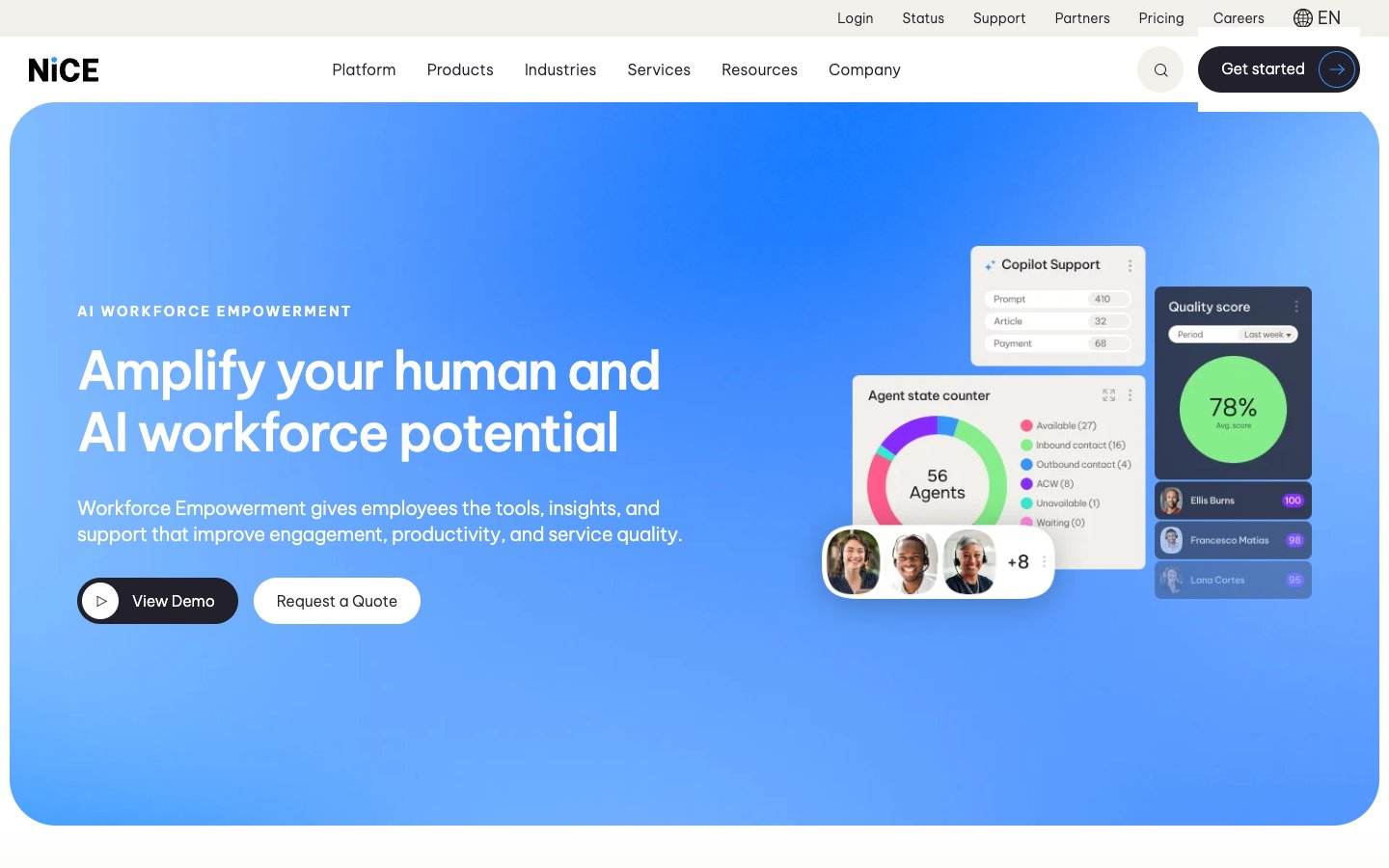
NICE AI agent management software is CCaaS-native, combining human and AI conversation intelligence, quality management, workforce management, and performance visibility inside CXone. Enterprise contact centers using NICE CXone Mpower Agents keep AI-agent creation, deployment, evaluation, and optimization within the NICE environment.
NICE AI Agent Management Software Types
NICE AI Agent Management Software Features
Standout Features and Capabilities of NICE
- Native AI Agent Lifecycle Management: Builds, deploys, monitors, evaluates, and optimizes customer-service AI agents through native CCaaS controls.
- Human and AI Conversation Intelligence: Analyzes voice and digital conversations handled by human service teams and native AI agents for sentiment, intent, behaviors, compliance, root causes, and outcomes.
- Integrated Quality and Workforce Management: Connects full-coverage interaction evaluation, custom scorecards, evaluator calibration, workforce planning, and performance visibility across human service teams and native AI agents.
Best Fit: Who Should Use NICE
- Enterprise contact centers standardized on NICE CXone for routing, quality management, workforce management, and analytics.
- Customer service organizations building and deploying native AI agents alongside human service teams.
- CX and QA teams seeking full-coverage interaction evaluation, human and AI quality management, and performance visibility within existing CCaaS infrastructure.
NICE Considerations
- Native AI-agent management centers on NICE and Cognigy AI agents within CXone, while external AI-agent suppliers require separate evaluation and management coverage.
- Suite consolidation connects NICE applications and selected third-party sources, while source-agnostic CX data unification across CCaaS providers, BPOs, AI-agent suppliers, and homegrown applications requires additional software.
NICE AI Agent Management Software Overview
NICE AI agent management software is built for enterprise contact centers extending existing CXone investments to customer-service AI agents. Organizations standardized on NICE can evaluate human and native AI service performance through one CCaaS suite, while multi-vendor AI-agent management and source-agnostic CX data unification require additional coverage.
Compare NICE CXone to AmplifAI for AI Agent Management Software
Compare NICE CXone Alternatives Across 13 Software Categories
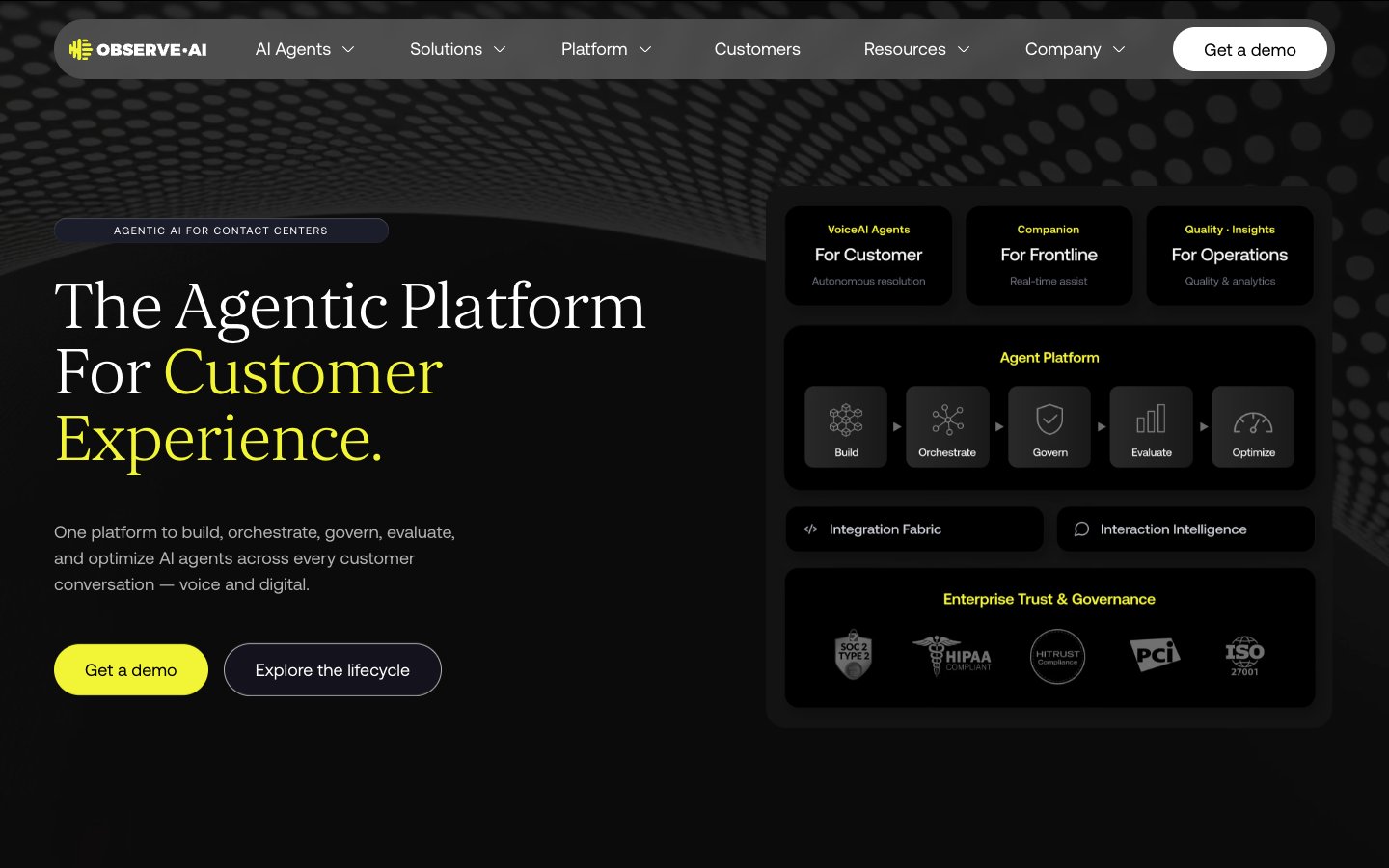
Observe.AI AI agent management software combines conversation intelligence and quality management for human service teams with native creation, testing, deployment, and optimization for Observe.AI agents. Contact centers using Observe.AI agents can evaluate 100% of human- and AI-handled conversations across voice and digital channels, connecting interaction behaviors and quality findings with customer and service outcomes.
Observe.AI AI Agent Management Software Types
Observe.AI AI Agent Management Software Features
Standout Features and Capabilities of Observe.AI
- Human and AI Conversation Intelligence: Analyzes voice and digital conversations for intent, sentiment, entities, behaviors, compliance, customer needs, outcomes, and root causes across human service teams and native AI agents.
- Full-Coverage Interaction Evaluation: Evaluates 100% of human- and AI-handled conversations with scorecards, transcript evidence, Auto QA, and manual review.
- Native AI Agent Lifecycle Management: Builds, tests, deploys, governs, monitors, and improves customer-service AI agents using simulations, release gates, production feedback, and optimization controls.
Best Fit: Who Should Use Observe.AI
- Enterprise contact centers already using Observe.AI for conversation intelligence, Auto QA, quality management, or coaching.
- Customer service organizations building and deploying Observe.AI agents alongside human service teams.
- CX and QA teams prioritizing 100% interaction evaluation, transcript-linked evidence, and outcome analysis across human and AI conversations.
Observe.AI Considerations
- Native AI-agent testing, release controls, and optimization apply to Observe.AI agents, while external AI-agent suppliers require separate evaluation and lifecycle coverage.
- Human quality management and AI-agent evaluation share interaction intelligence, while identical scorecards, weights, auto-fails, thresholds, and one calibration process across both populations require additional coverage.
- Conversation, quality, customer-context, and outcome data remain centered on Observe.AI, while source-agnostic CX data unification, partner performance comparison, role-based corrective workflows, and intervention-level effectiveness measurement require additional software.
Observe.AI AI Agent Management Software Overview
Observe.AI AI agent management software is built for enterprise contact centers expanding an existing conversation intelligence and quality program to native AI agents. Organizations can evaluate 100% of human- and AI-handled conversations and connect interaction findings with customer and service outcomes, while source-agnostic CX data unification, multi-vendor AI-agent management, and role-based corrective actions require additional coverage.
Compare Observe.AI to AmplifAI for AI Agent Management Software
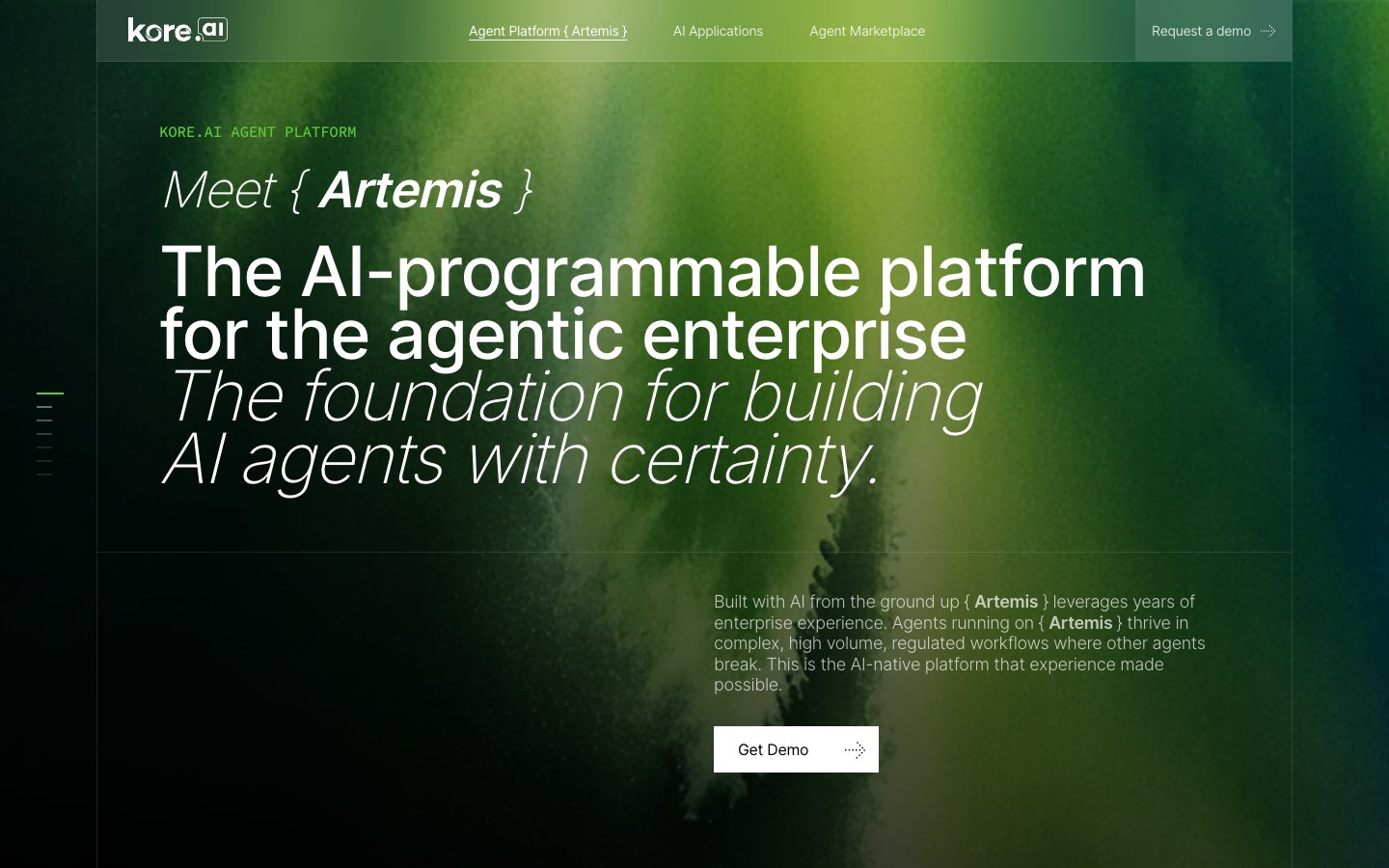
Kore.ai AI agent management software is AI-agent-platform-native, supporting lifecycle control from testing and deployment through production tracing, evaluation, optimization, and rollback for native agents. Kore.ai extends governance, monitoring, evaluation, and value measurement across external agent frameworks, while Quality AI manages human contact-center quality through a separate product layer.
Kore.ai AI Agent Management Software Types
Kore.ai AI Agent Management Software Features
Standout Features and Capabilities of Kore.ai
- Native AI Agent Lifecycle Management: Manages testing, deployment, production tracing, evaluation, optimization, versioning, rollout, and rollback for natively built agents.
- Cross-Framework Agent Governance: Registers externally built agents for inventory, monitoring, evaluation, policy oversight, and value tracking.
- AI Agent Quality and Reliability Evaluation: Scores safety, accuracy, task success, tool use, guardrails, handoffs, grounding, latency, errors, drift, cost, and outcomes through simulations and production traces.
Best Fit: Who Should Use Kore.ai
- Enterprise customer service organizations building and deploying Kore.ai agents for voice and digital channels.
- AI engineering and governance teams managing native and externally built agents across multiple frameworks.
- Teams prioritizing simulation-based evaluation, production tracing, safety and reliability scoring, version control, and rollback.
Kore.ai Considerations
- Quality AI scores human service representatives, while Agent Platform evaluates AI-agent sessions through a separate product layer. One quality framework and full-coverage evaluation for both populations require additional software.
- Kore.ai cross-framework capabilities center on enterprise AI governance, observability, evaluation, and value measurement, while unified customer-service performance management requires separate coverage for human teams, BPOs, customer journeys, corrective workflows, and business outcomes.
- Cross-framework evaluation and testing support external agents, while complete independent assurance across voice and digital simulations, customer-journey test suites, integration regression, and continuous production validation requires additional coverage.
Kore.ai AI Agent Management Software Overview
Kore.ai AI agent management software is built for enterprises managing native AI-agent lifecycles and broader agent governance across multiple frameworks. Customer service organizations can use Kore.ai for AI-agent testing, observability, quality evaluation, and lifecycle control, while unified hybrid-workforce performance management and source-agnostic CX data unification require additional coverage.
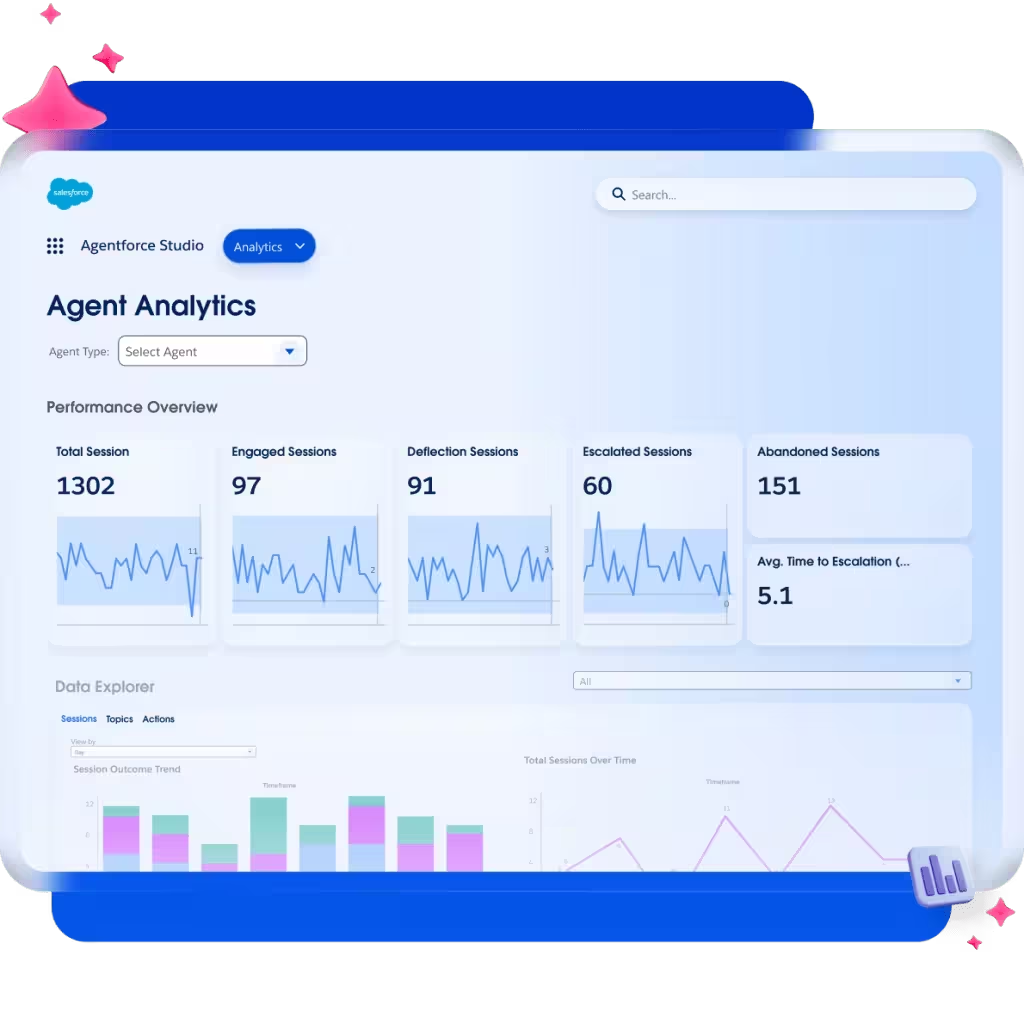
Salesforce Agentforce AI agent management software is CCaaS-native, combining voice and digital service, CRM data, workforce engagement, and quality management for human service teams with native AI-agent lifecycle controls inside Agentforce Contact Center. Customer service organizations building Agentforce agents use Testing Center and Observability to test release behavior, trace production sessions, apply custom scorers, monitor health, and guide optimization.
Salesforce Agentforce AI Agent Management Software Types
Salesforce Agentforce AI Agent Management Software Features
Standout Features and Capabilities of Salesforce Agentforce
- Generated Test Cases and Multi-Turn Simulations: Tests native AI agents against realistic customer-service scenarios and custom evaluation metrics before release.
- Production Session Tracing: Tracks native AI-agent topic and action sequences, latency, failures, escalations, resolution, and custom business measures after deployment.
- CRM-Grounded Customer Context: Grounds native AI-agent responses in customer records, service knowledge, and conversation history while preserving context through AI-to-human handoffs.
Best Fit: Who Should Use Salesforce Agentforce
- Enterprise contact centers already standardized on Salesforce CRM, Service Cloud, and Data 360.
- Customer service organizations building and deploying Agentforce agents alongside human service teams.
- AI and service teams prioritizing native testing, production session tracing, custom scoring, and CRM-grounded context within existing Salesforce infrastructure.
Salesforce Agentforce Considerations
- Agentforce Observability and Testing Center manage native AI agents, external AI-agent suppliers require separate quality evaluation and lifecycle coverage.
- Human-service quality management and AI-agent evaluation remain distinct Salesforce capabilities, while one quality framework, full-coverage evaluation, and measured corrective actions for both workforces require additional software.
- Data 360 harmonizes Salesforce and connected customer data for CRM context, while source-agnostic CX data unification across CCaaS, WFM, QA, BPO, external AI-agent suppliers, homegrown applications, and business sources requires additional coverage.
Salesforce Agentforce AI Agent Management Software Overview
Salesforce Agentforce AI agent management software is built for enterprises extending Salesforce customer data and service infrastructure to native AI agents. Organizations standardized on Salesforce can keep AI-agent testing, observability, and CRM context inside existing infrastructure, while shared human and AI performance management, multi-vendor quality evaluation, and source-agnostic CX data unification require additional coverage.
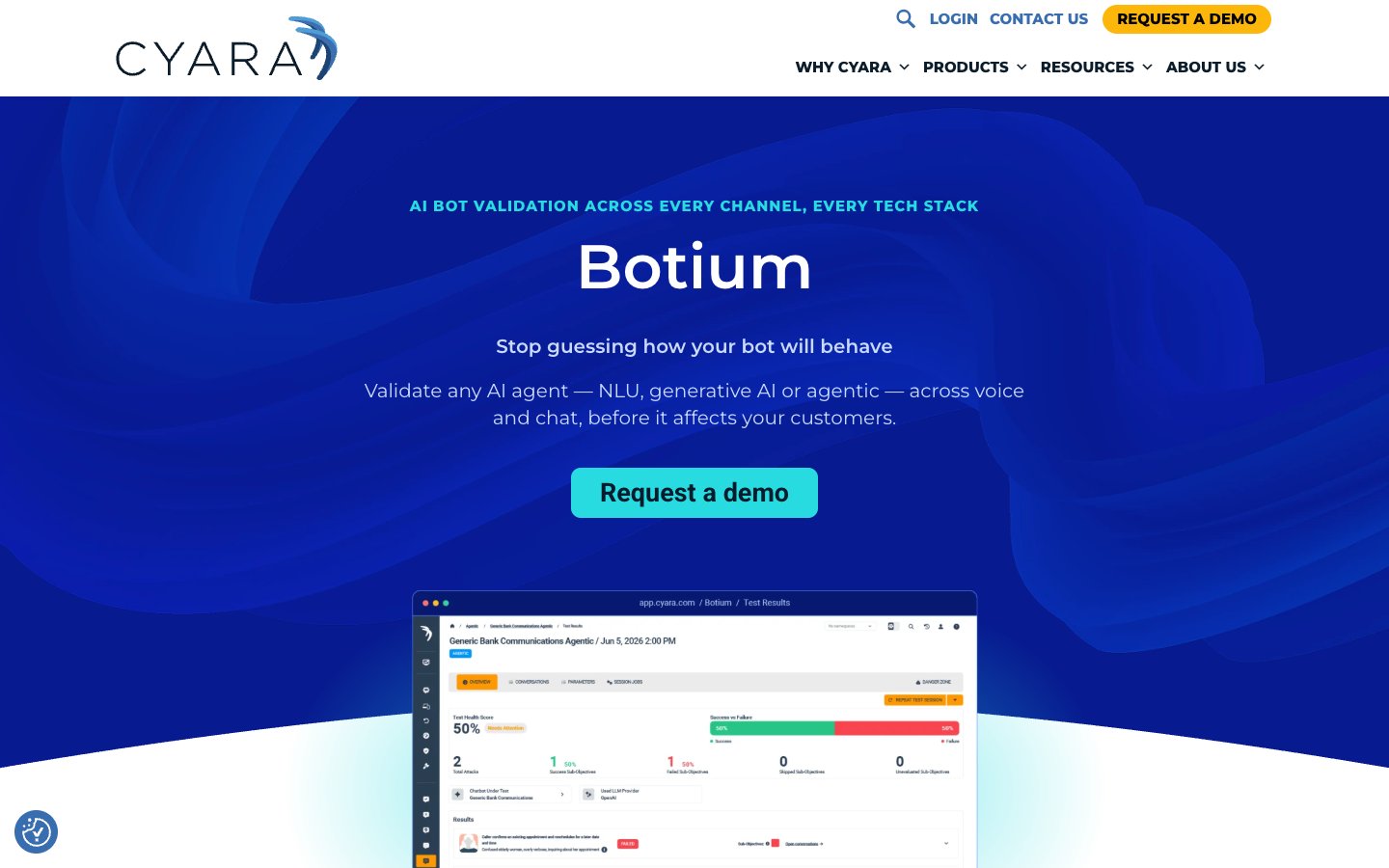
Cyara AI agent management software provides independent testing and assurance for customer-service AI agents on voice and digital channels. CX and quality teams use business-defined objectives, synthetic conversations, reusable test suites, release validation, regression monitoring, load testing, and production assurance to evaluate AI-agent behavior.
Cyara AI Agent Management Software Types
Cyara AI Agent Management Software Features
Standout Features and Capabilities of Cyara
- Synthetic Voice and Digital Testing: Simulates customer conversations across AI-agent suppliers, contact-center infrastructure, integrations, and backend paths before deployment.
- Release and Regression Assurance: Repeats business-defined test suites after prompt, model, routing, integration, or infrastructure changes.
- Production Assurance Monitoring: Samples live AI-agent conversations and alerts teams to regressions, failures, compliance risks, and service degradation after deployment.
Best Fit: Who Should Use Cyara
- Enterprise contact centers using customer-service AI agents from multiple suppliers across voice and digital channels.
- CX, QA, and engineering teams validating prompt, model, routing, integration, and infrastructure changes before release.
- Regulated or high-volume service environments requiring repeatable safety, compliance, load, regression, and production-assurance testing.
Cyara Considerations
- Cyara tests and monitors customer-service AI agents from external suppliers, while creation and deployment controls remain with existing AI-agent providers.
- Synthetic tests and sampled production monitoring validate AI-agent behavior, while full-population evaluation across actual human and AI interactions requires additional software.
- Independent assurance focuses on agent behavior, customer journeys, integrations, infrastructure, load, and regressions, while source-agnostic CX data unification, unified quality standards, role-based corrective workflows, and hybrid-workforce performance management require separate coverage.
Cyara AI Agent Management Software Overview
Cyara AI agent management software is built for contact centers that need independent AI-agent testing, regression assurance, and production monitoring across voice and digital service. Cyara complements AI-agent providers and unified performance-management software by validating release behavior before deployment and monitoring reliability after changes.
How to Choose AI Agent Management Software
Choosing AI agent management software starts with understanding how customer-facing AI agents are deployed, which vendors offer management alongside monitoring, how customers move between AI and human service, and who on your team is accountable for correcting AI-agent performance. The types of AI agent management software matter, as conversation intelligence evaluates human and AI interactions, while native AI agent management keeps testing, deployment, and oversight inside existing CCaaS or AI-agent provider environments. Independent testing and assurance tests AI-agent releases across suppliers, while unified CX performance management like AmplifAI applies conversation intelligence and quality management across AI agents, human teams, BPOs, channels, and customer journeys on source-agnostic CX data, routing findings into role-based next best actions and measuring customer-service outcomes after changes.
Use the following decision criteria when choosing an AI agent management software vendor:
- Management Responsibility: Match AI-agent quality, performance, governance, testing, corrective action, and outcome-measurement requirements to conversation intelligence and quality management, native AI agent management, independent assurance, or unified CX performance management, to confirm clear ownership when requirements span more than one software type.
- AI-Agent Portfolio: Inventory production AI agents, suppliers, channels, use cases, languages, and homegrown deployments to determine whether native AI agent management within one provider environment covers your portfolio or consistent evaluation needs to extend across multiple suppliers.
- Hybrid Workforce Coverage: Confirm whether a vendor supports scorecard variants with performance comparisons extending to AI agents, human teams, BPOs, sites, channels, and handoffs when customers move between service teams and suppliers.
- Data and Evaluation Foundation: Evaluate how AI agent management software vendors connect CCaaS, CRM, WFM, QA, survey, conversation, AI-agent, and business data sources, and confirm whether human and AI evaluations use one quality framework with scorecard variants, shared calibration, and evidence chain.
- Corrective Action and Measurement: Confirm an AI agent management software vendor routes AI-agent or human-agent performance findings to an accountable role with a required response, deadline, and follow-up. AI-agent findings should drive prompt, knowledge, routing, integration, or deployment changes, while human-agent findings should drive quality review or coaching, with customer, service, and business results measured post-intervention.
- Testing and Release Assurance: Determine whether native simulations and AI-agent release gates cover your AI-agent release risk or independent testing must validate voice and digital scenarios across suppliers, integrations, channels, and customer journeys, while regression monitoring continues after prompt, model, knowledge, routing, or infrastructure changes.
If you need assistance conducting a full comparison of AI agent management software vendors, speak to a CX leader at AmplifAI.
Speak to a CX Leader at AmplifAI
Customer Service and Support Software Buyer’s Guides
Our CX specialists at AmplifAI research and evaluate customer service and support software for CX leaders, AI program owners, quality teams, workforce planners, and contact center decision-makers. Alongside this guide to AI agent management software, AmplifAI’s buyer’s guides compare vendors across the broader customer service and support software market, covering category features, best-fit use cases, key considerations, and evaluation criteria for developing your shortlist.
AI Agent Management Software FAQs
What is AI agent management software?
AI agent management software evaluates and improves deployed customer-facing AI agents across voice and digital channels. Customer-service teams use AI agent management software to apply one quality framework with scorecard variants for AI agents and human teams, route findings into accountable corrective actions, and measure results after changes.
What's the difference between AI agent management and AI agent monitoring?
AI agent monitoring tracks production behavior such as availability, latency, errors, task completion, escalations, and conversation outcomes, while AI agent management evaluates monitoring evidence against quality and performance standards, assigns findings to accountable roles, routes corrective actions across prompts, knowledge, routing, or service processes, and measures results after changes.
Can AI agent management software evaluate AI agents from multiple vendors alongside human teams?
Yes, but cross-vendor AI-agent evaluation depends on the type of AI agent management software. Native AI agent management applies to AI agents built within one provider environment, while unified CX performance management software like AmplifAI evaluates customer-facing AI agents from multiple suppliers alongside human teams and BPOs using one quality framework, connected CX data, role-based next best actions, and outcome measurement.
Do contact centers need more than one type of AI agent management software?
Contact centers may need more than one type of AI agent management software when customer-facing AI agents span multiple provider environments. Native AI-agent lifecycle controls support development and release within each provider environment, while unified CX performance management like AmplifAI applies one quality framework with scorecard variants for AI agents, human teams, and BPOs, routes corrective actions to accountable roles, and measures whether changes improve customer-service outcomes.
Authored By:

.svg)
Reviewed By:
