
AI Agents Aren’t Replacing Human Agents in Customer Service Yet
- Published:
- Updated:
- Authored by
-
 Sean Minter Founder, CEO
“AI agents are going to replace human agents” has become one of the loudest narratives in customer service, especially as brands, BPOs, and enterprise support teams look for faster service, lower costs, and better ROI from their AI investments.
AI agents are taking on more repeatable service volume, but the data shows customer service jobs haven’t disappeared, and customer service representative demand has grown in some parts of the market. AI agent ROI hasn’t reached the level companies expected from lowering frontline headcount, because the returns promised by agentic AI in customer service aren’t coming from replacing people as fast as possible, they’re coming from redesigning how AI agents and human agents work together.
Rather than replacing human agents, call center workforces are becoming hybrid, with agentic AI becoming a permanent fixture in the customer journey, but not yet mature or cost-effective enough to remove human judgment from the equation. Customer service leaders need to know how AI agents perform, where human agents matter most, where handoffs break, and how both sides of the service experience affect customer trust, quality, compliance, and cost.
Customer Service and Support Jobs Haven't Disappeared
Customer service and support jobs haven't disappeared, they've been restructured. AI is expanding because contact centers have always needed a better way to handle repetitive service volume. AI agents are absorbing the simpler interactions while customer expectations continue rising across speed, availability, personalization, escalation, and resolution.
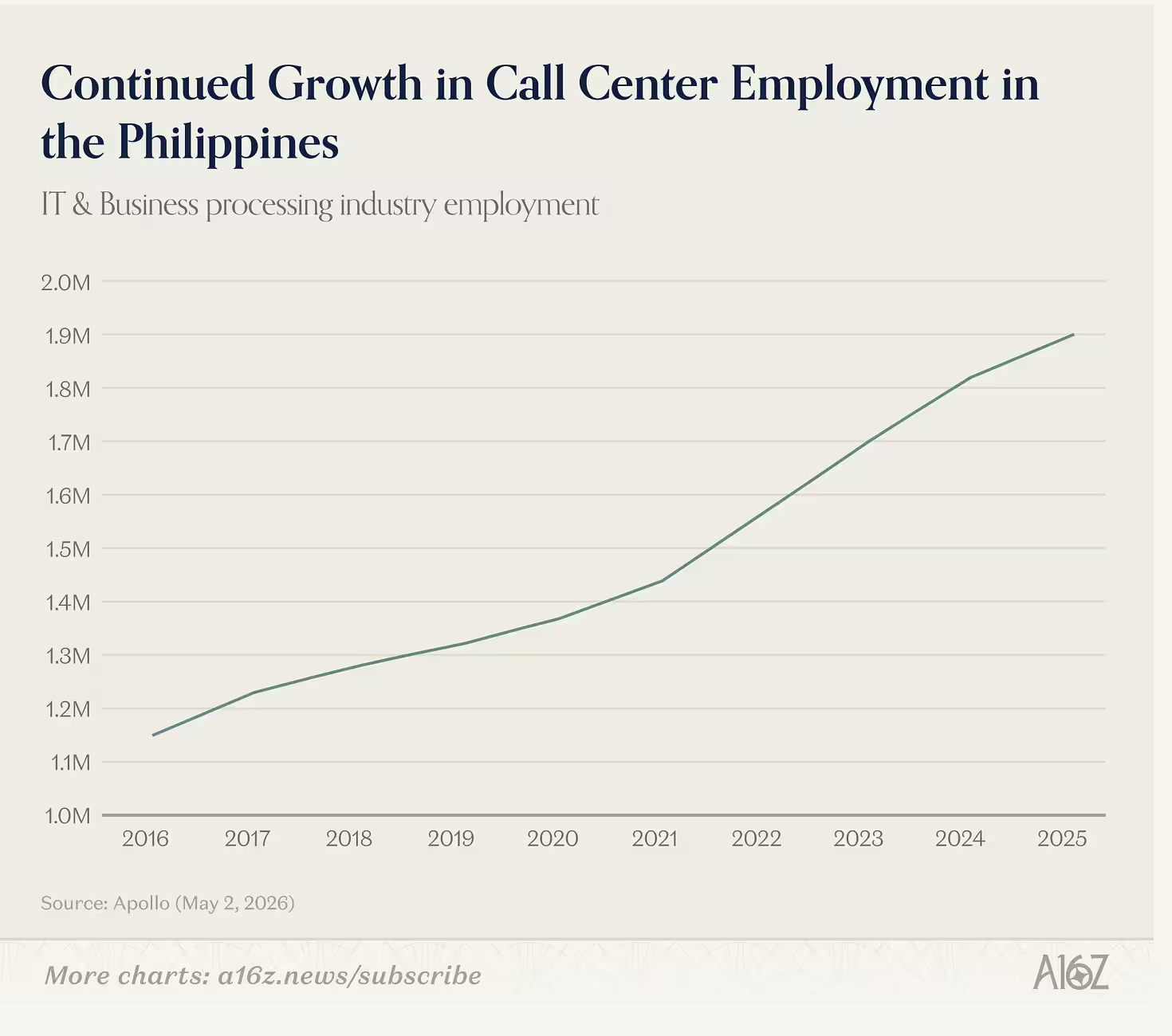
In the Philippines, a region with one of the clearest global indicators for outsourced customer service demand, IT and business processing employment rose from 1.15 million in 2016 to 1.9 million in 2025, concurrent with gen AI capabilities advancing across the same period.
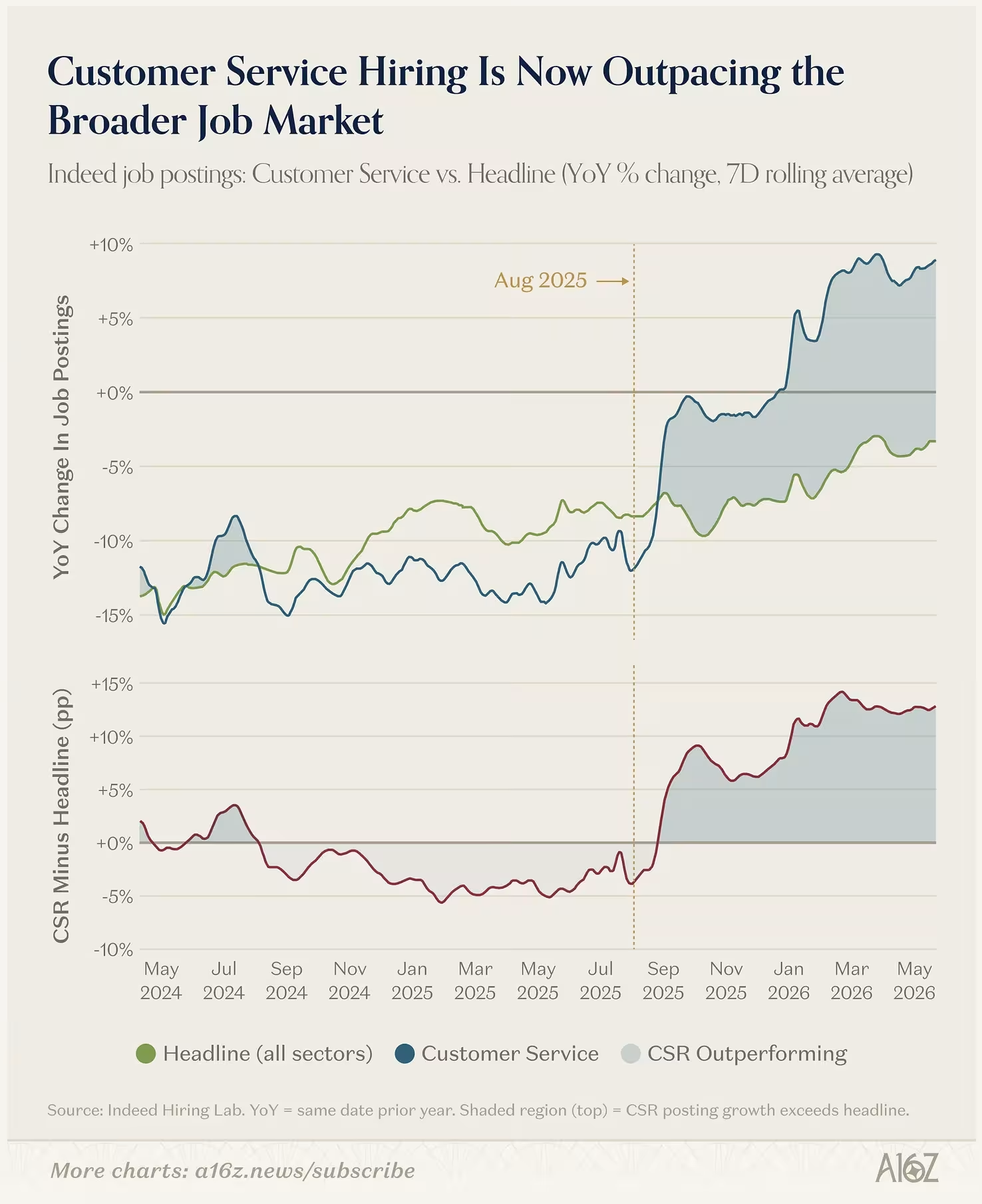
Customer service postings have outperformed the broader job market since August 2025, with demand running ahead of the headline market instead of falling behind it, showing that contact centers are still hiring while redesigning what those roles do.
AI Substitution and AI Augmentation Create Different Outcomes in Customer Service
AI substitution and AI augmentation are getting treated as the same trend, which is partly why customer service leaders keep hearing that AI delivers stronger ROI than human agents. The most recent data doesn’t support that assumption cleanly because customer service is experiencing both dynamics at the same time.
AI substitution removes a task from a human agent and gives that work to automation, while AI augmentation improves how human agents, supervisors, QA teams, and customer service leaders perform the work that still requires judgment.
David George's article, 'The AI Job Apocalypse Is a Complete Fantasy,' reinforces the distinction, with Goldman Sachs and recent academic research showing that augmentation's effects on employment are outpacing substitution across most industries.
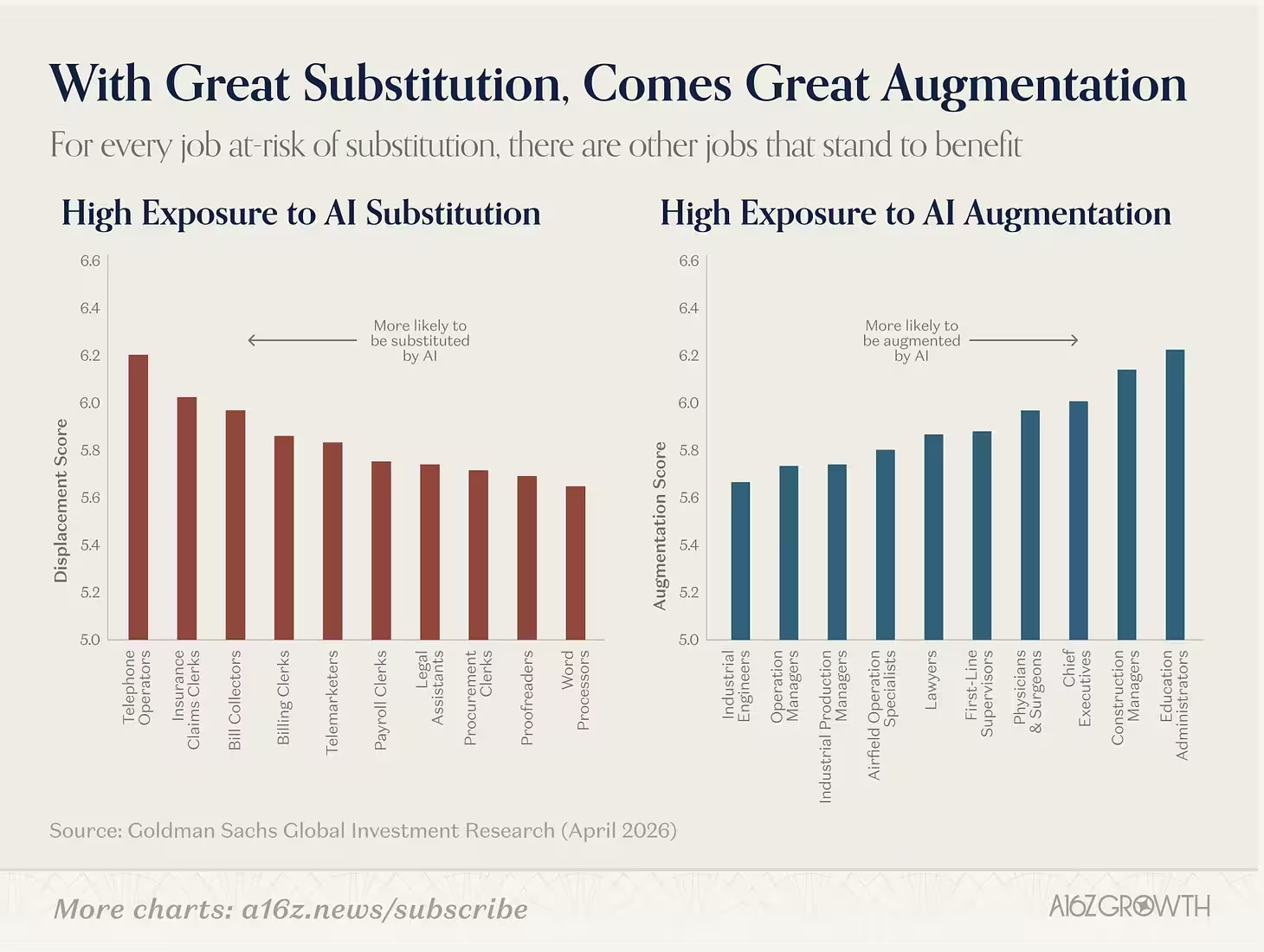
On paper, customer service looks like one of the most obvious AI substitution categories because AI agents can answer common questions, follow structured workflows, and stay available around the clock, but customer service isn't a clean replacement category just because some tasks are easy to automate.
Replacing a simple task and improving a complex service workflow produce entirely different outcomes, with different metrics, costs, risks, and management requirements.
The labor data out of the Philippines, combined with recent customer service job-posting trends, shows why AI agents haven't replaced human agents in contact centers as early reports suggested. Customer service work is being redistributed, not erased, creating an entirely different dilemma for contact center leaders in knowing which tasks belong with AI agents, which moments still need human agents, and which leadership systems need to change when substitution and augmentation happen inside the same contact center.
AI Agent ROI in Call Centers Isn't Fully Realized
AI agent ROI in call centers isn’t adding up as cleanly as the AI substitution narrative promises. Goldman Sachs internal estimates put the all-in cost of an AI call center representative at roughly $92 per day compared with roughly $90 per day for a human call center representative, challenging the assumption that replacing human agents with AI agents creates immediate cost savings.
Call center work doesn’t behave like text-only AI work. Coding agents, internal copilots, and document-based AI workflows rely heavily on text, where output is cheaper, review cycles are easier, and the risk of a bad response reaching a customer in real time is lower. Customer service conversations bring voice, tone, timing, emotion, authentication, escalation, compliance, and customer frustration into the ROI equation.
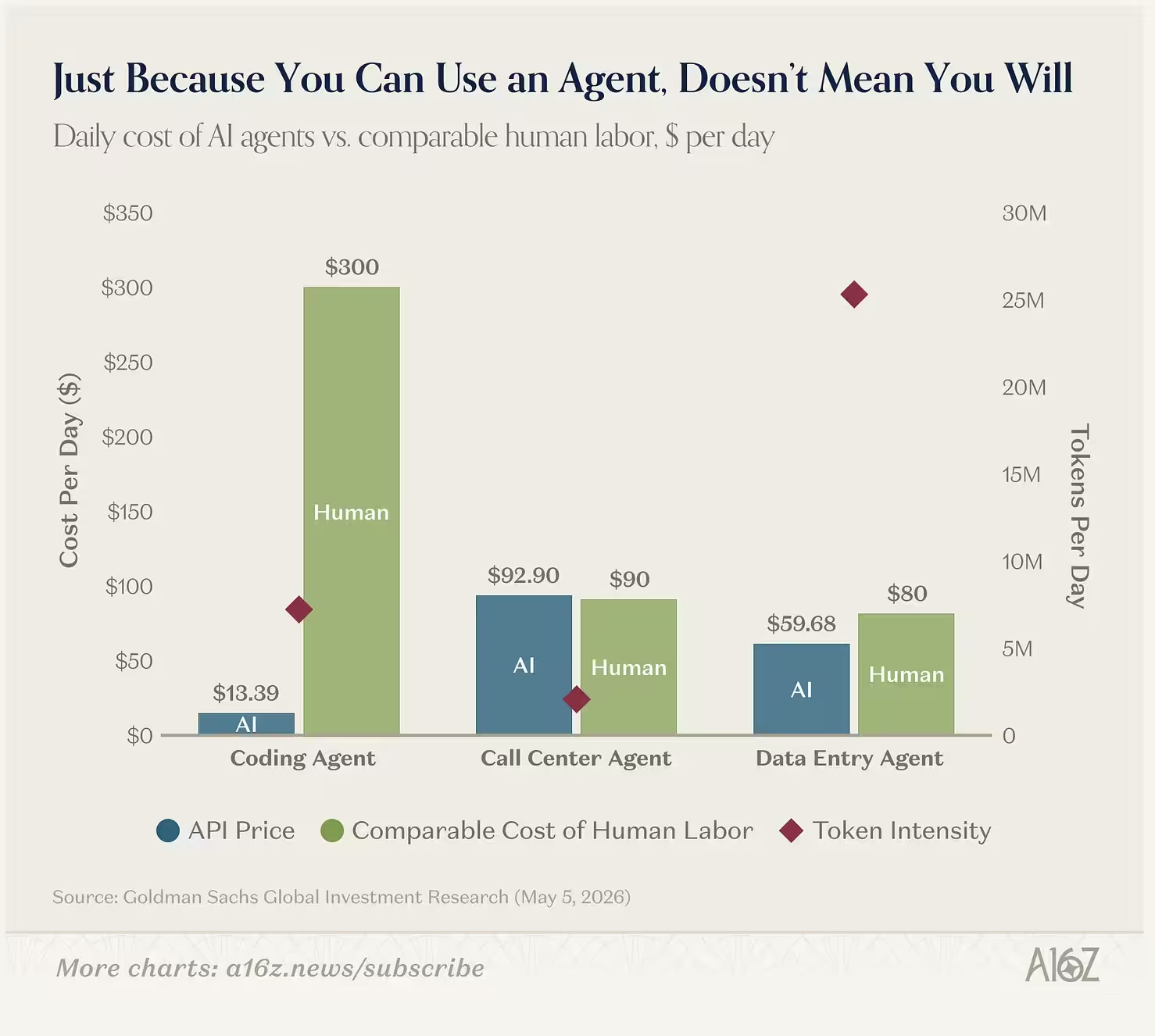
AI agents will get cheaper, avoice models will improve, and contact centers will automate more service volume. None of that changes the current reality that AI agent ROI in customer service needs to be measured against the full service experience, including containment quality, escalation accuracy, repeat contact rates, compliance outcomes, customer satisfaction, and whether the customer leaves with a resolved issue.
AI agents create value in customer service, but only when the use case fits. Replacing human agents outright creates a higher ROI bar than automating simple tasks or augmenting the people who manage complex service work.
Customer Experience Quality Limits AI Agents Replacing Human Agents
Customer experience quality limits where AI agents can replace human agents. Customers judge service by resolution, trust, and accountability, not by whether the interaction was automated.
Klarna became one of the most visible examples of why AI agents can't yet replace the need for human agents. Klarna started rehiring after service quality declined with customers receiving generic, and repetitive answers. Klarna’s hiring reversal shows that replacing service capacity without preserving service quality creates a different cost that shows up in loss of customer trust, repeat contacts, escalations, and damaged brand perception.
AI agents work best when the customer’s need is simple, the workflow is clear, and the answer can be delivered quickly without losing context. Human agents still excel when the customer’s issue carries emotion, ambiguity, urgency, compliance exposure, or business risk that AI agents can’t resolve safely on their own.
Klarna's reversal wasn't a failure of AI capability, it was a failure of treating substitution as a workforce strategy without managing the quality consequences. The costs that disappeared from payroll resurfaced as repeat contacts, escalation volume to understaffed human queues, and brand damage that took longer to repair than the automation took to deploy. Substitution without performance oversight doesn't reduce cost, it redistributes cost into places that are harder to measure and more expensive to fix.
AI Agent Performance Management Is Where ROI Lives
ROI from AI agents in customer service isn't coming from headcount reduction, it's coming from managing AI agents and human agents as one workforce with shared performance visibility across QA, coaching, compliance, customer intelligence, and service outcomes.
Contact centers that treat AI agents as a technology deployment miss the performance management layer that determines whether AI improves the customer experience or degrades it. A contact center would never put hundreds of new human agents in front of customers and measure success only by how many conversations closed without escalation, but that's how most contact centers measure AI agent performance today.
AI agent failures compound differently than human agent failures. Human agents miss expectations through knowledge gaps, coaching gaps, fatigue, or judgment errors that supervisors can identify and correct in one-on-one sessions. AI agents fail through hallucinated answers, incomplete context, poor escalation logic, prompt drift, policy misinterpretation, and high-confidence responses drawn from limited data, and those failures scale across thousands of interactions before anyone catches them.
As AI agents absorb more password resets, status updates, and routine questions, human agents handle a higher concentration of escalations, retention risks, compliance-sensitive conversations, billing disputes, and service failures that AI agents can't resolve. Average handle time, call resolution rates, and script adherence lose value as performance metrics when the human queue is shaped by more complex interactions. Human agents need to be evaluated on judgment, resolution quality, escalation handling, empathy, compliance, and service recovery, with coaching built around the work they're doing now, not the work they did before AI agents entered the queue.
Supervisors need visibility into which agents handle complex issues well, which agents struggle with emotional escalation, which conversations create repeat contacts, and which coaching actions improve performance over time. AI agents reducing routine volume doesn't reduce the need for skilled human agents, it increases the need for stronger QA, targeted coaching, and workforce planning that accounts for a fundamentally different service mix.
Contact centers capturing real ROI from AI aren't choosing between AI agents and human agents. Leading contact centers manage both through one connected performance model that ties AI agent containment quality, human agent resolution quality, coaching effectiveness, compliance outcomes, and customer intelligence into one system that doesn't just show what's happening, it models high-performer behaviors, builds coaching plans from what's working, and tells supervisors, QA teams, and frontline leaders what to do next across both workforces.
AI Agents are Changing Customer Service, Not Replacing Human Agents
AI agents will handle more customer service volume as voice models improve, API costs drop, and agentic workflows mature. Contact center leaders deciding how to invest need to move past the substitution-versus-augmentation debate and focus on managing both workforces with the performance visibility, coaching infrastructure, and quality accountability a blended customer service environment demands.
AmplifAI was built from the operator's seat, connecting AI agent performance and human agent performance across QA, coaching, customer intelligence, compliance, gamification, and service outcomes in one platform, giving CX leaders, supervisors, and QA teams one view of how both workforces affect the customer experience.
To learn what AI agent and human agent performance management looks like inside your contact center, speak to a CX leader at AmplifAI.